![[ Click Here to Enter an Alternate Text for this Image ]](/data//sites/default/files/report_2788/images/image_file_0_FirstPageImage_604516733.jpg)
Underage drinking continues to be a serious public health issue in the United States. In 2013, nearly 1 in 4 (8.7 million) adolescents and young adults under the legal drinking age of 21 drank alcohol in the past month.1 Of all adolescents and young adults aged 12 to 20, about 14 percent (5.4 million) were binge drinkers, and 4 percent (1.4 million) were heavy drinkers.1,2 According to the National Survey on Drug Use and Health, most underage drinkers aged 12 to 20 reported that the last time they consumed alcohol was at someone else's home (56 percent) or at their own home (30 percent).3 The location of drinking varied by age, with drinkers aged 12 to 14 more likely than those aged 15 to 17 and those aged 18 to 20 to have been drinking in their own home (37 vs. 25 and 31 percent, respectively). However, those aged 12 to 14 were less likely than adolescents aged 15 to 17 to report drinking at someone else's home (49 vs. 61 percent). Young adults aged 18 to 20 were more likely than adolescents aged 12 to 14 and adolescents aged 15 to 17 to consume alcohol in venues such as restaurants, bars, and clubs (10 vs. 2 and 3 percent, respectively).3 Underage drinkers are at risk of injury from events such as car crashes, burns, falls, drowning, and alcohol and drug poisoning, which could require hospitalization or result in death.3
According to the Drug Abuse Warning Network (DAWN), between 158,000 and 205,000 emergency department (ED) visits involved underage drinking per year from 2004 to 2011. DAWN was a public health surveillance system that monitored drug- and underage drinking–related ED visits in the United States. To have been a DAWN case, an ED visit must have involved a drug, either as the direct cause of the visit or as a contributing factor. For individuals younger than age 21, DAWN tracked ED visits involving alcohol only and alcohol combined with illicit drugs and/or pharmaceuticals. This issue of The CBHSQ Report examines temporal patterns of underage drinking—specifically, time of day and day of the week—from 2004 to 2011. This report examines alcohol-related ED visits among patients aged 12 to 20 and for the subgroups of patients aged 12 to 17 and 18 to 20. Patients aged 12 to 17 are subsequently referred to as "adolescents," and those aged 18 to 20 are referred to as "young adults."
Although many surveys collect information about underage drinking, including data on frequency, quantities consumed, and incidence of underage drinking–related ED visits, much less information is available about patterns of risky behavior on a daily or weekly basis.4 Knowledge of the temporal aspects of a severe outcome of underage drinking through examining ED visits may provide important information about developing age-appropriate prevention messages that target the time periods that have the highest risk of underage drinking.
To find out the days and times when underage drinking–related ED visits were most likely to occur, DAWN data on ED visits from 2004 to 2011 were combined. The total number of visits involving underage drinking by patients aged 12 to 20 was estimated to be nearly 1.5 million.5 Suicide attempts involving alcohol were excluded because they involve the deliberate use of alcohol for self-harm and may reflect a different pattern than recreational drinking.
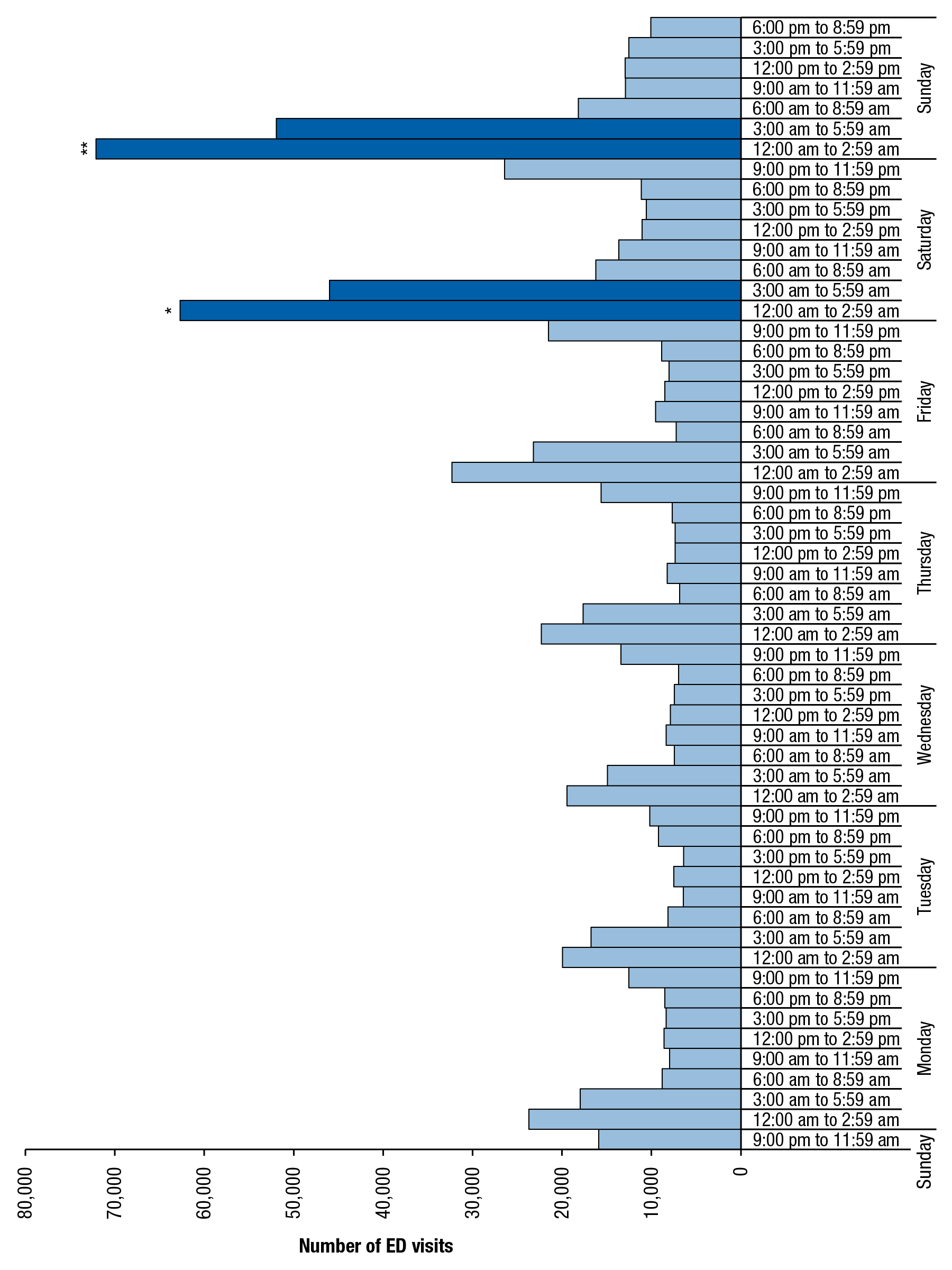
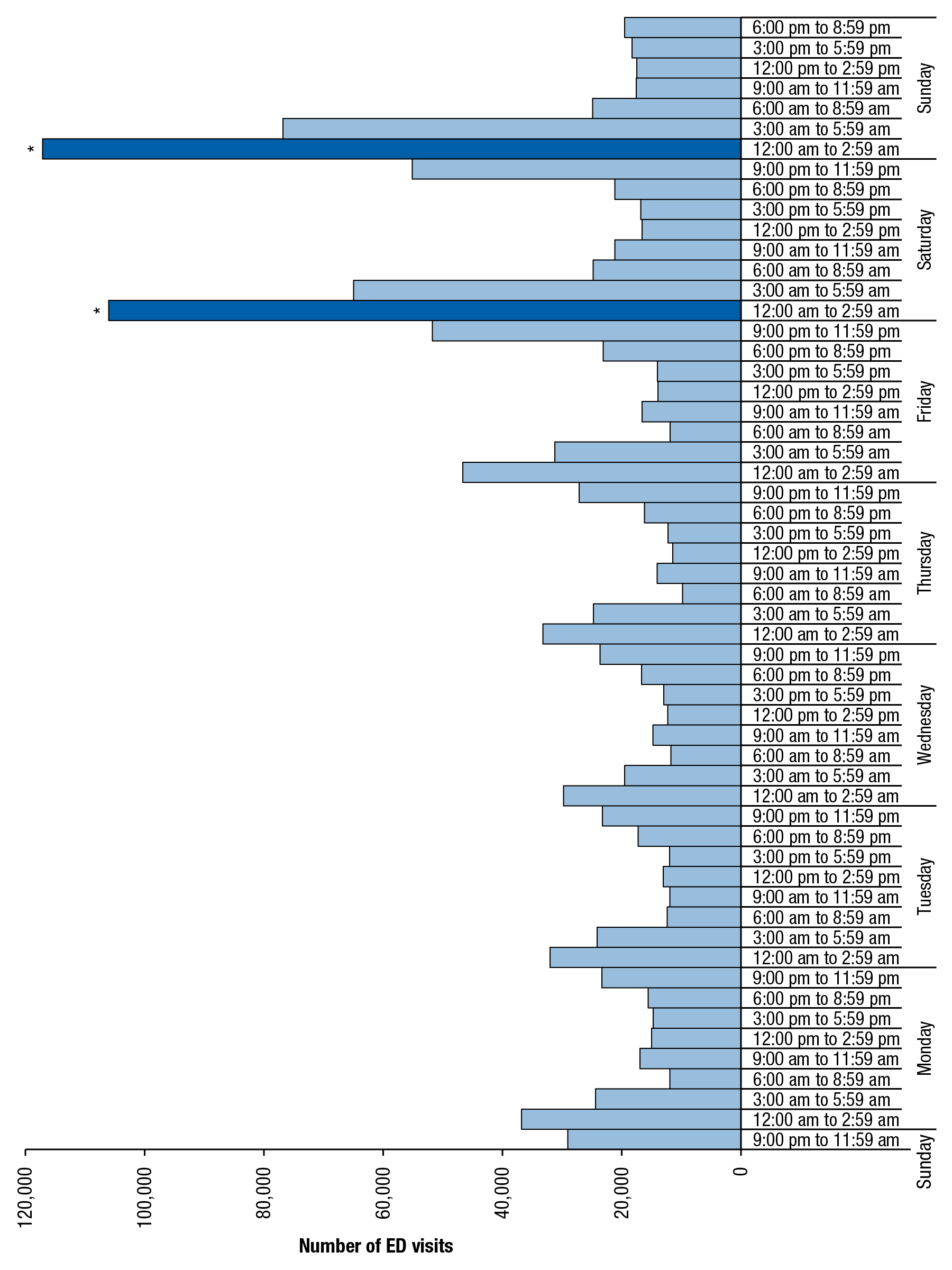
The multiyear data were divided into eight 3-hour periods per day for each day of the week. The first time period started on Sunday at 9:00 p.m. These time periods were the minimum needed to ensure enough visits for analysis in any given time period (Figure 1).6 Each 3-hour period was compared with every other period in the week to identify the peak periods for underage drinking–related ED visits during the week.7 These steps were then repeated for the 12 to 17 and 18 to 20 age groups.
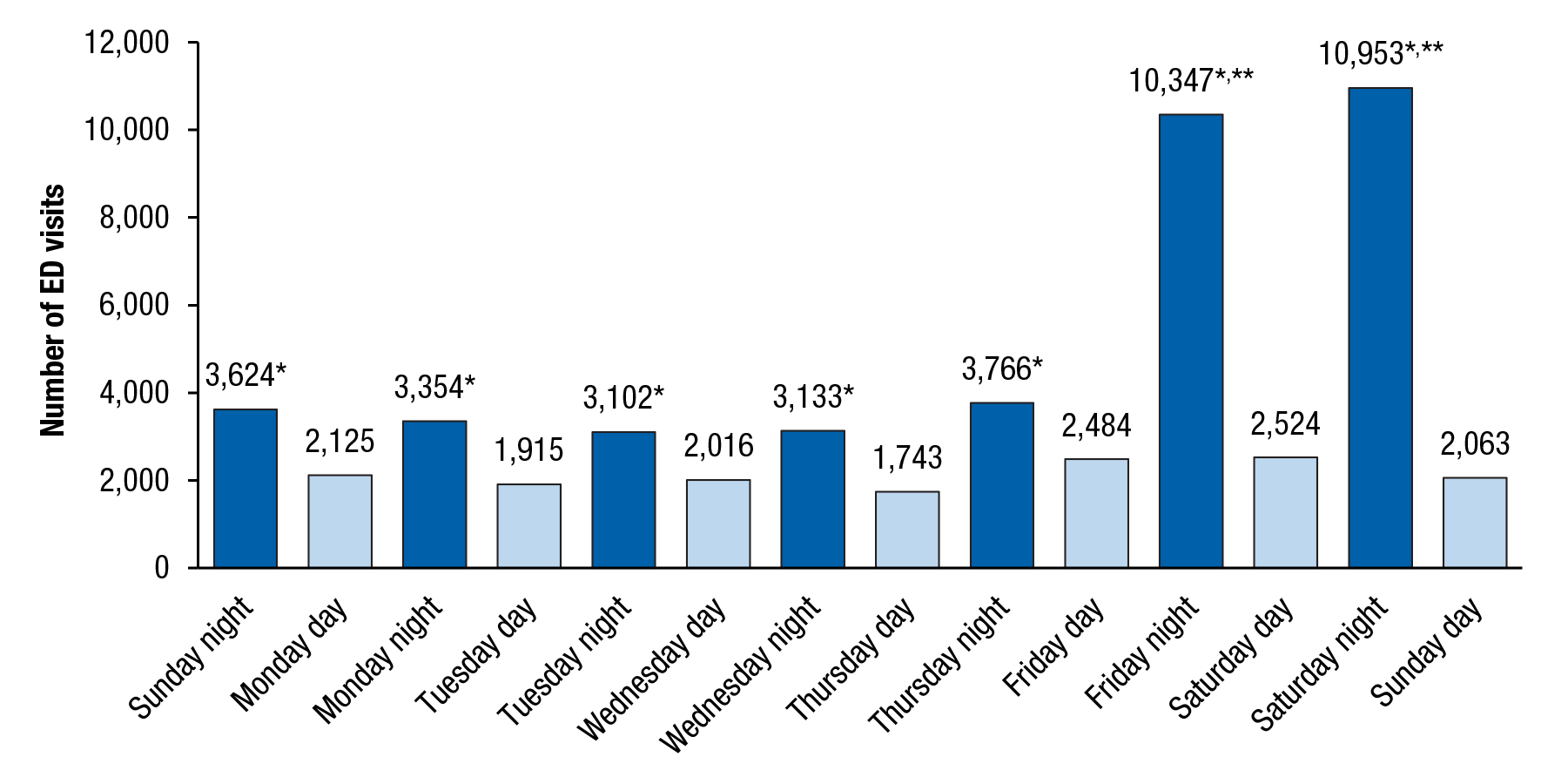
Next, to assess whether any nights had elevated numbers of ED visits, the week was divided into nighttime periods, defined as 9:00 p.m. to 5:59 a.m., and daytime periods, defined as 6:00 a.m. to 8:59 p.m. The visits per hour for Friday and Saturday nights were compared with the visits per hour for weekday nights (Sunday through Thursday). The weeknights were then compared with weekdays. Because Friday and Saturday nights were treated as the weekend, Sunday night at 9:00 p.m. was treated as the first night of the week. Starting with Sunday night, the visits per hour for each weeknight were compared with the visits per hour for the following day to assess whether visits on weeknights were higher than daytime visits. These steps were then repeated for the 12 to 17 and 18 to 20 age groups.
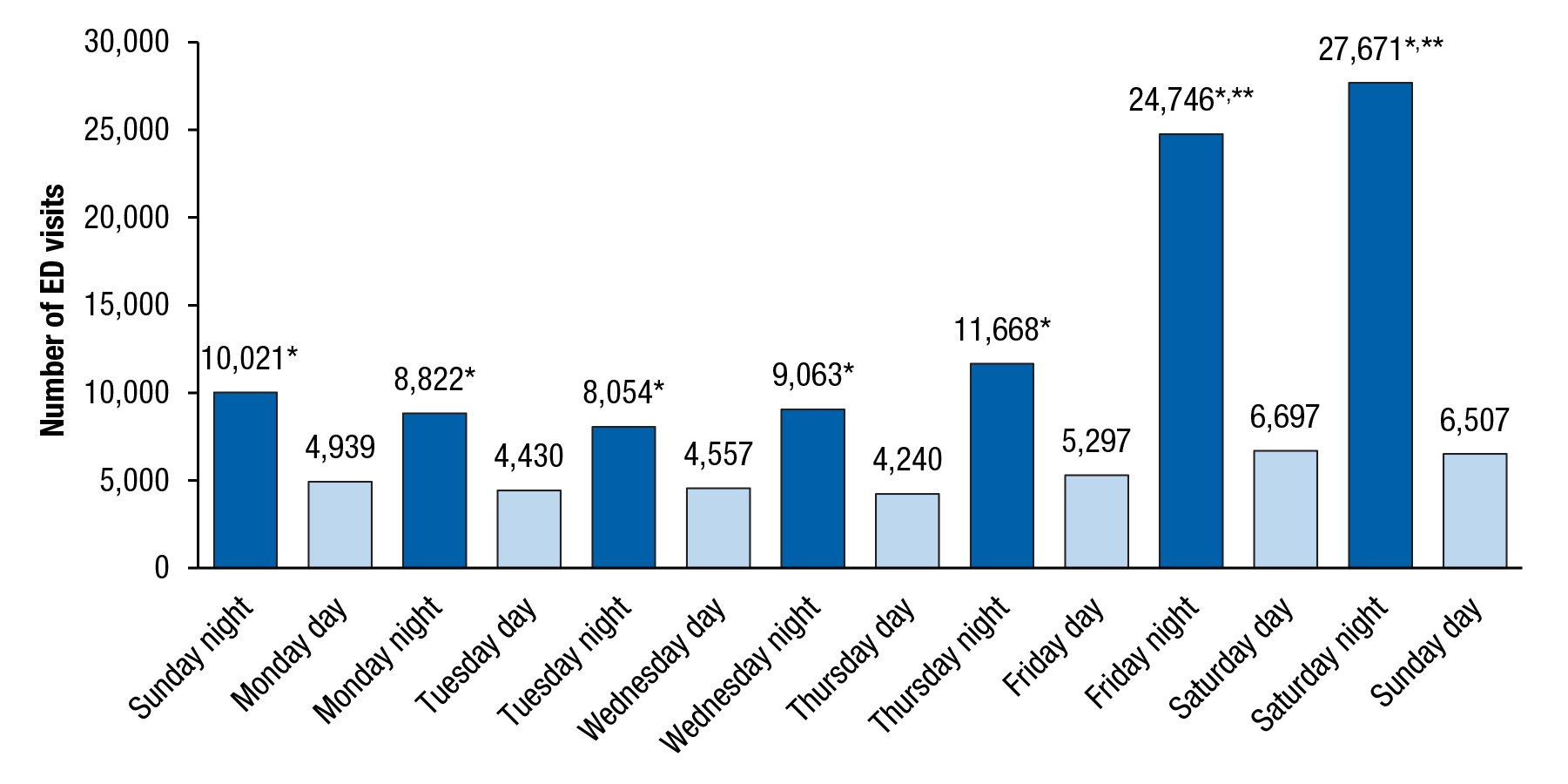
Alcohol-related ED visits involving patients aged 12 to 20 peaked on Friday and Saturday nights between 12:00 a.m. (midnight) and 2:59 a.m. (Figure 1). Visits per hour were also higher during weekend nighttime periods (9:00 p.m. to 5:59 a.m.) than weeknight periods (Figure 2). Because much underage drinking occurs in a social context, and socializing among adolescents and young adults tends to occur on Friday and Saturday nights, this temporal pattern is not surprising.3,7 However, when each weeknight (Sunday night through Thursday night) was compared with the following weekday, nighttime visits were consistently higher than daytime visits (Figure 2).
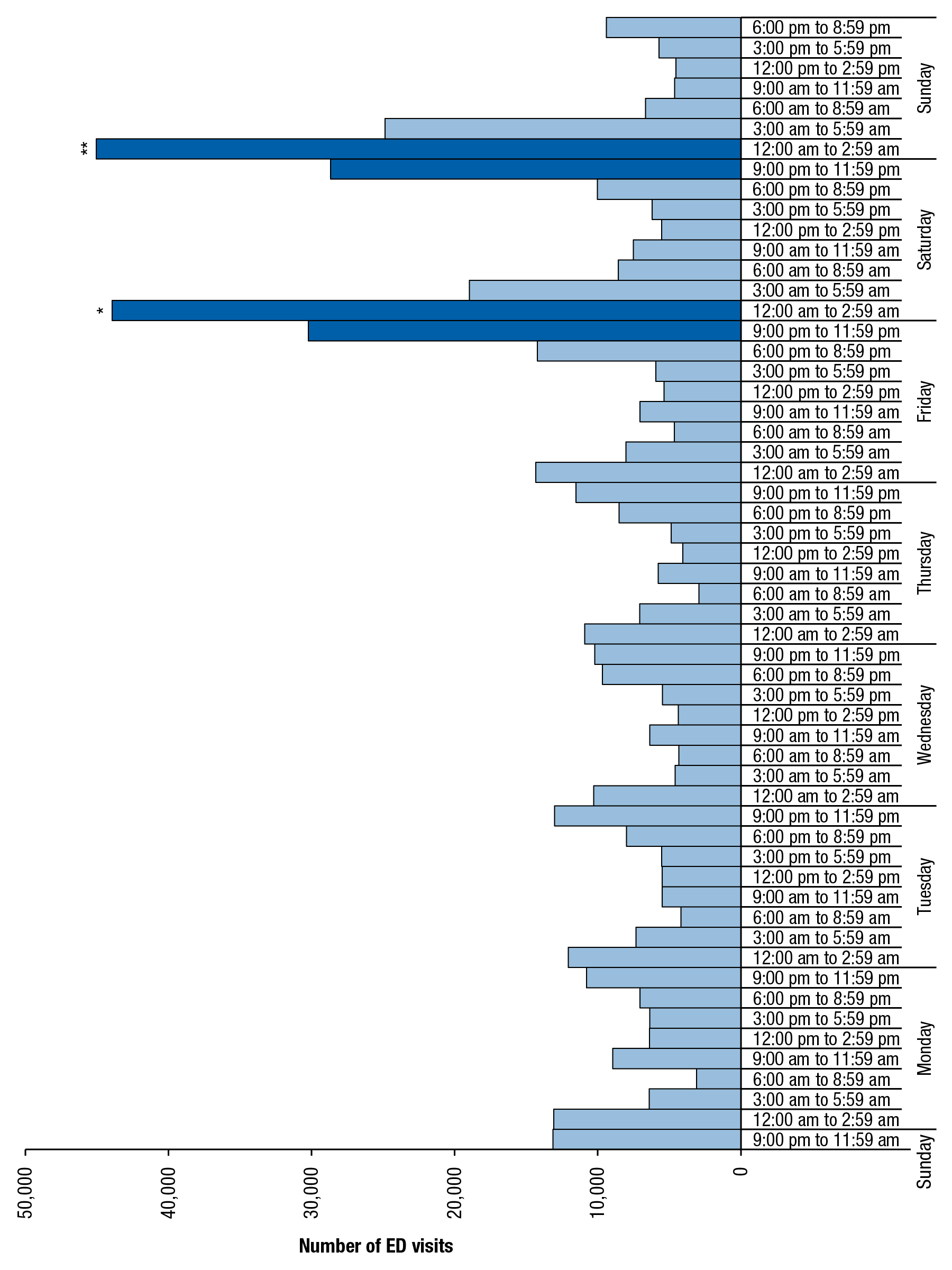
When the data for the age subgroups (12 to 17 and 18 to 20) were analyzed, different patterns emerged. For young adults, the peak periods for alcohol-related ED visits started on Friday and Saturday nights between 12:00 a.m. and 2:59 a.m. and continued until 5:59 a.m. the following morning (Figure 3). In contrast, the peak period for alcohol-related ED visits for adolescents began at 9:00 p.m. on Friday and Saturday nights and continued until 2:59 a.m. the following morning (Figure 4).
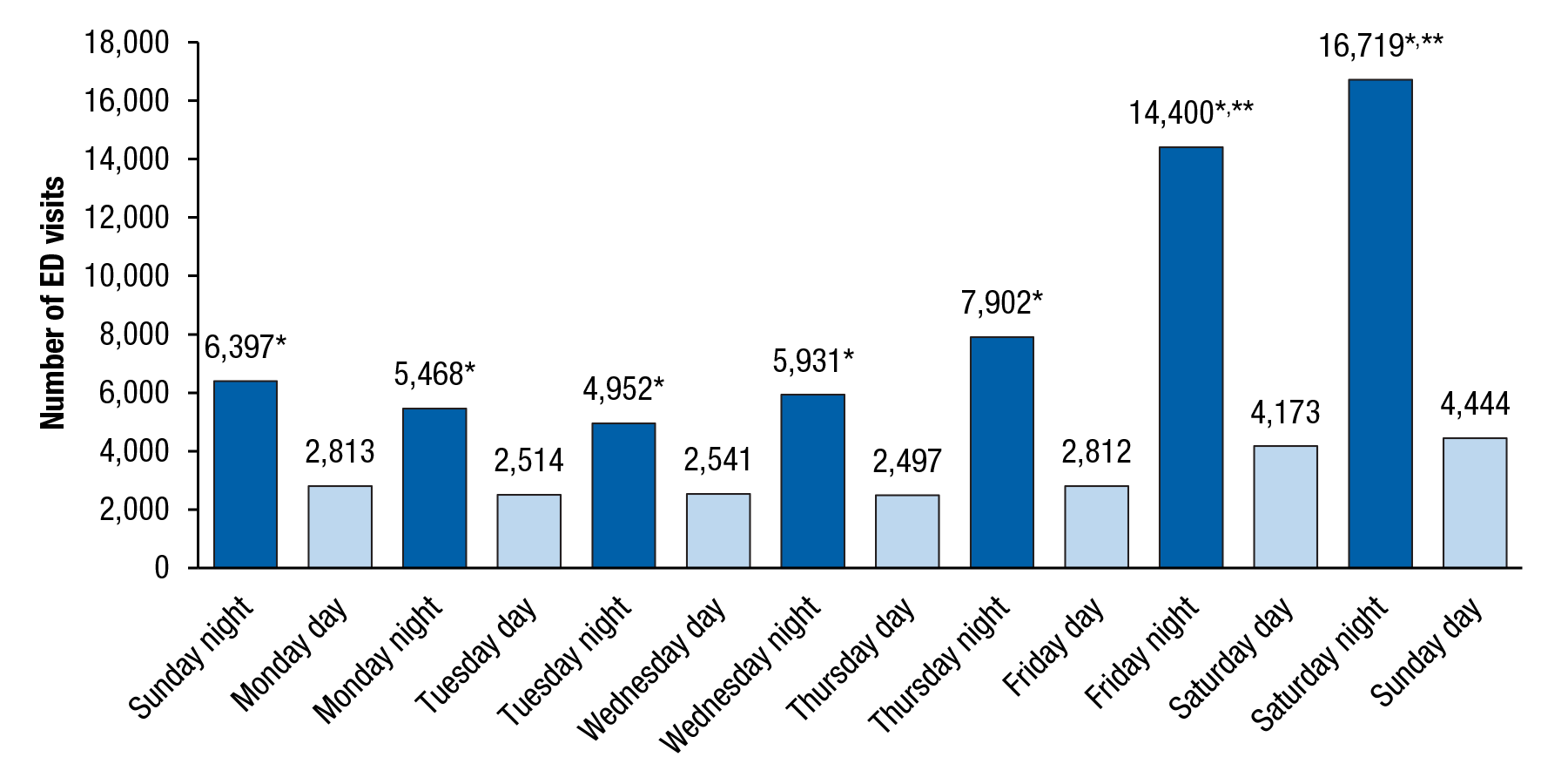
For both the young adults and adolescents, visits per hour were higher during weekend nighttime periods (9:00 p.m. to 5:59 a.m.) than during weeknights (Figures 5 and 6). Throughout the week, nighttime visits per hour were higher than daytime visits per hour.
Figure 1. Emergency department (ED) visits involving underage drinking1 among patients aged 12 to 20, by time of day and day of the week: 2004 to 2011

Figure 2. Average emergency department (ED) visits1 involving underage drinking per hour by day/night2 for patients aged 12 to 20: 2004 to 2011

Figure 3. Emergency department (ED) visits involving underage drinking1 among patients aged 18 to 20, by time of day and day of the week: 2004 to 2011

Figure 4. Average emergency department (ED) visits1 involving underage drinking per hour by day/night2 for patients aged 18 to 20: 2004 to 2011

Figure 5. Emergency department (ED) visits involving underage drinking1 among patients aged 12 to 17, by time of day and day of the week: 2004 to 2011

Figure 6. Average emergency department (ED) visits1 involving underage drinking per hour by day/night2 for patients aged 12 to 17: 2004 to 2011

Alcohol-related injuries and other health consequences can occur at any time of the day or week when underage adolescents and young adults consume alcohol. These consequences can range from relatively minor injuries, which result in being treated and released from the ED, to serious and even deadly consequences, such as alcohol poisoning and motor vehicle crashes.
The DAWN data show that ED visits involving underage drinking are highest on weekend evenings and early mornings, times when adolescents and young adults are likely to engage in social activities and possibly drive while under the influence of alcohol. Friday and Saturday nights had more ED visits per hour than Sunday through Thursday nights for adolescents and young adults. The increase in ED visits by young adults started in the 12:00 a.m. to 2:59 p.m. period and continued until 5:59 a.m. on Friday and Saturday nights. In comparison, ED visits by adolescents started earlier in the evening on Friday and Saturday nights (9:00 p.m.) (Figure 5). This may indicate that underage drinking starts earlier in the evening for adolescents than it does for young adults. Furthermore, although the findings were less dramatic, Sunday through Thursday nighttime visits per hour were higher than the following daytime visits per hour for adolescents and young adults (Figure 4).
ED visits are teachable moments when hospital staff can intervene with underage adolescents and young adults and their parents or guardians and discuss the dangers of underage drinking. ED visits also provide insight into when high-risk drinking is occurring. Understanding what times of day and days of the week underage drinkers are visiting the ED and how this is influenced by age can be combined with other information, such as where drinking is taking place and with whom, to develop targeted prevention strategies. For example, parents and other responsible adults will want to be especially vigilant about supervising social activities, monitoring for alcohol use, and permitting access to motor vehicles on Friday and Saturday nights. College administrators could also provide alternative alcohol-free venues and activities to promote safe weekend activities. However, DAWN data reveal that risky drinking behavior takes place throughout the week, even on nights not associated with partying.
Crane, E. H., & Cai, R. (2016). Temporal patterns of emergency department visits related to underage drinking. The CBHSQ Report: January 20, 2017. Center for Behavioral Health Statistics and Quality, Substance Abuse and Mental Health Services Administration, Rockville, MD.