
Marijuana is the most commonly used illicit drug in the United States for the population overall and for youths in particular.1 Although the laws regarding marijuana use have changed in a number of states over the past decade, marijuana use remains illegal under federal laws in all states (e.g., the Controlled Substances Act; http://www.fda.gov/regulatoryinformation/legislation/ucm148726.htm).
Research has indicated that there are health risks associated with youth marijuana use,2 including poorer education/employment outcomes,3 poorer cognitive outcomes,4,5 increased likelihood of vehicle crashes,6 and increased addiction risk.7 Even though research indicates that youth marijuana use is a health risk, nationally only 1 in 5 adolescents perceived great risk from monthly marijuana use in 2014, which is lower than in any other year from 2002 to 2013.8 Preventing adolescents from starting to use marijuana is an effective way to reduce the impact of marijuana use in the future. Thus, it is useful for state policymakers and prevention specialists to assess recent trends in youths' marijuana use and their perception of the great risk of harm to their health from marijuana use.
All states continue efforts to reduce adolescent marijuana use. As longitudinal research has shown, youth attitudes about the risks associated with substance use are often closely related to their use, with an inverse association between use and risk perceptions (i.e., the prevalence of use is lower among those who perceive high risk of harm from use).9 Thus, states with a high prevalence of adolescent marijuana use would be expected to have a low prevalence of adolescent perception that there is a great health risk from using marijuana. State-level information about marijuana use and attitudes about marijuana use can provide states with vital data to inform educational and prevention efforts.
This issue of The CBHSQ Report uses National Surveys on Drug Use and Health (NSDUH) data to present national and state (including the District of Columbia) estimates of past month marijuana use and perceptions of great risk from smoking marijuana once a month among youths aged 12 to 17.10 Estimates are annual averages based on combined 2013 and 2014 NSDUH data from 39,600 respondents.10 The combined 2013-2014 estimates are compared to estimates from combined 2012-2013 data, which are based on responses from 45,000 youths aged 12 to 17.11
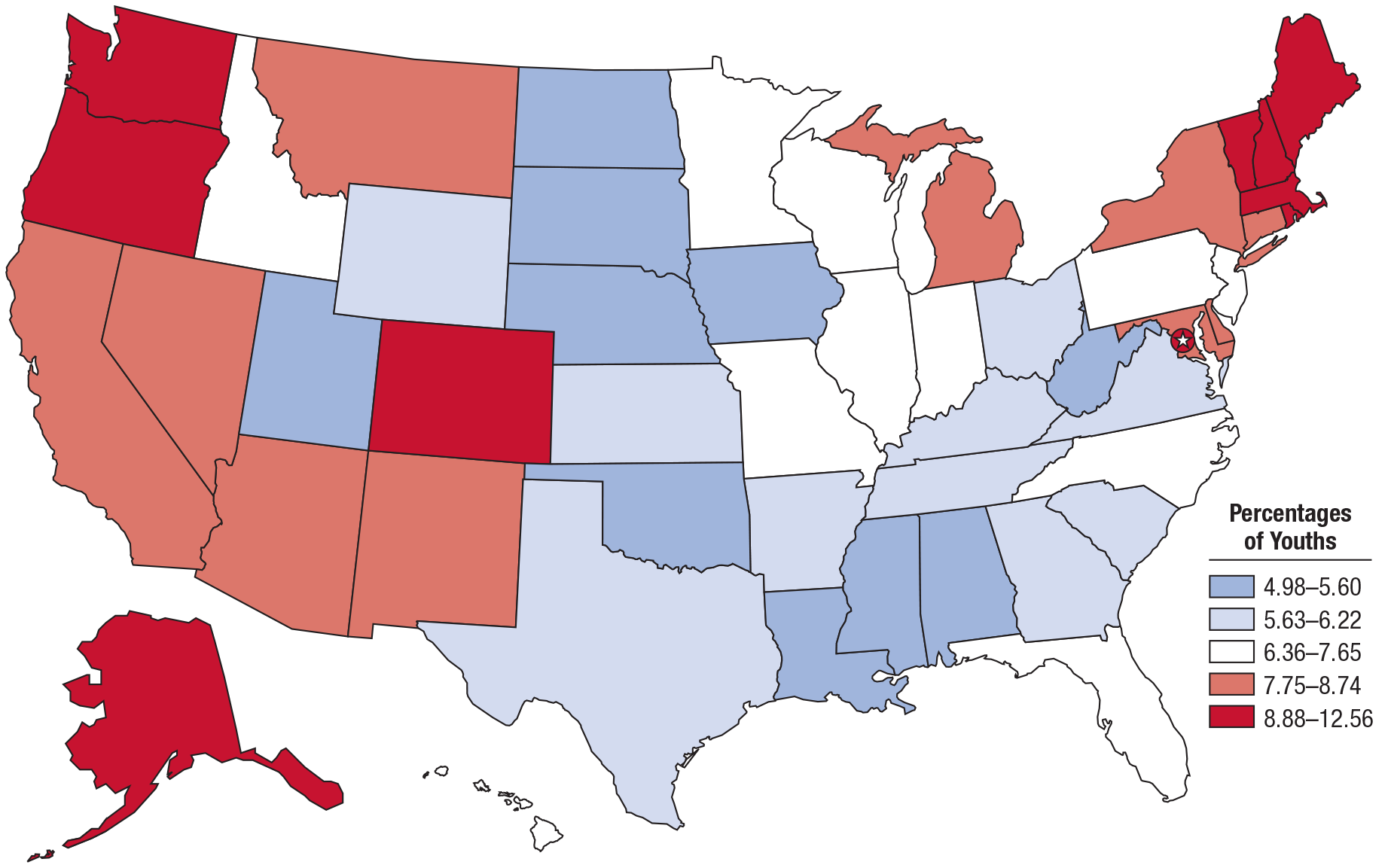
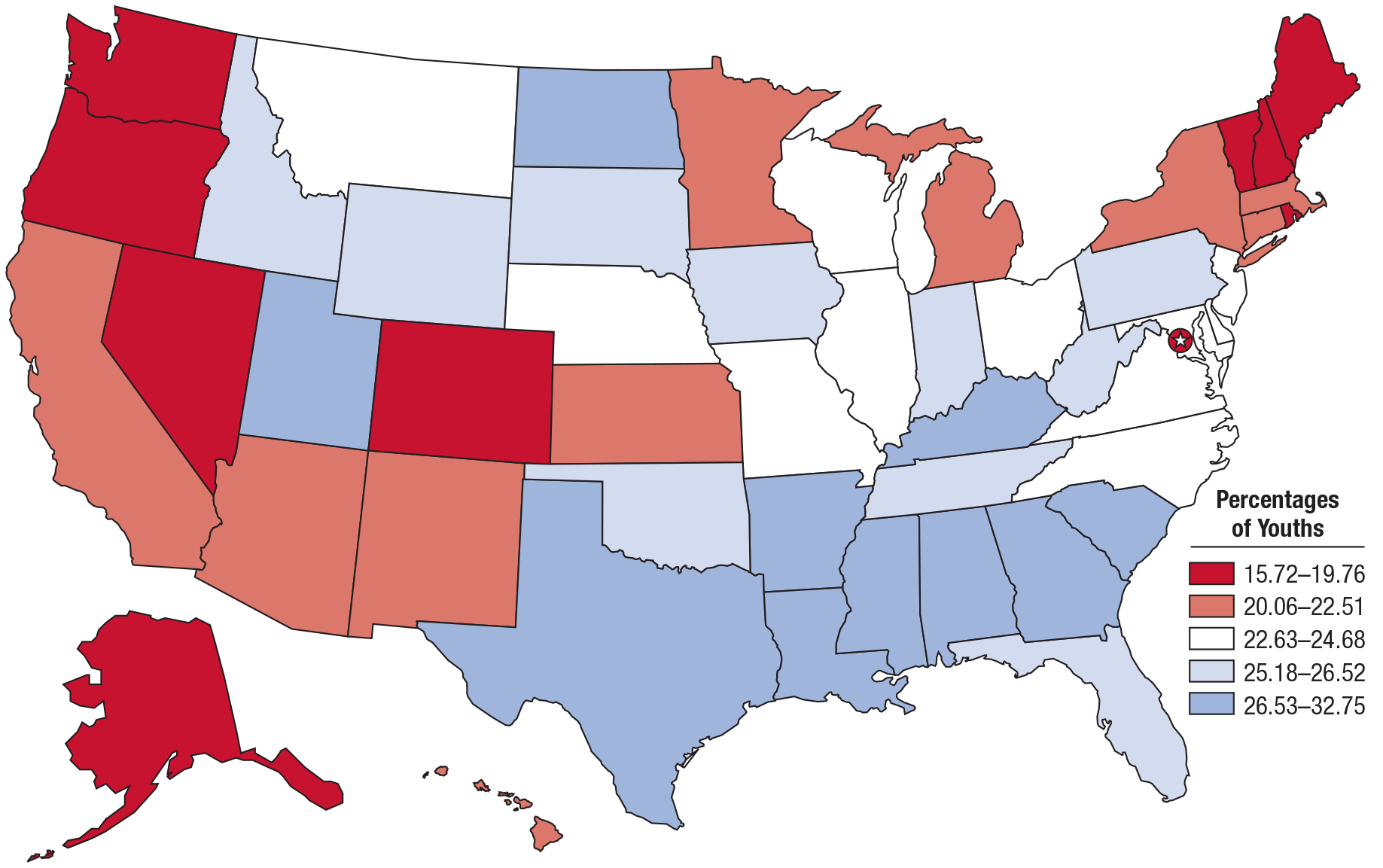
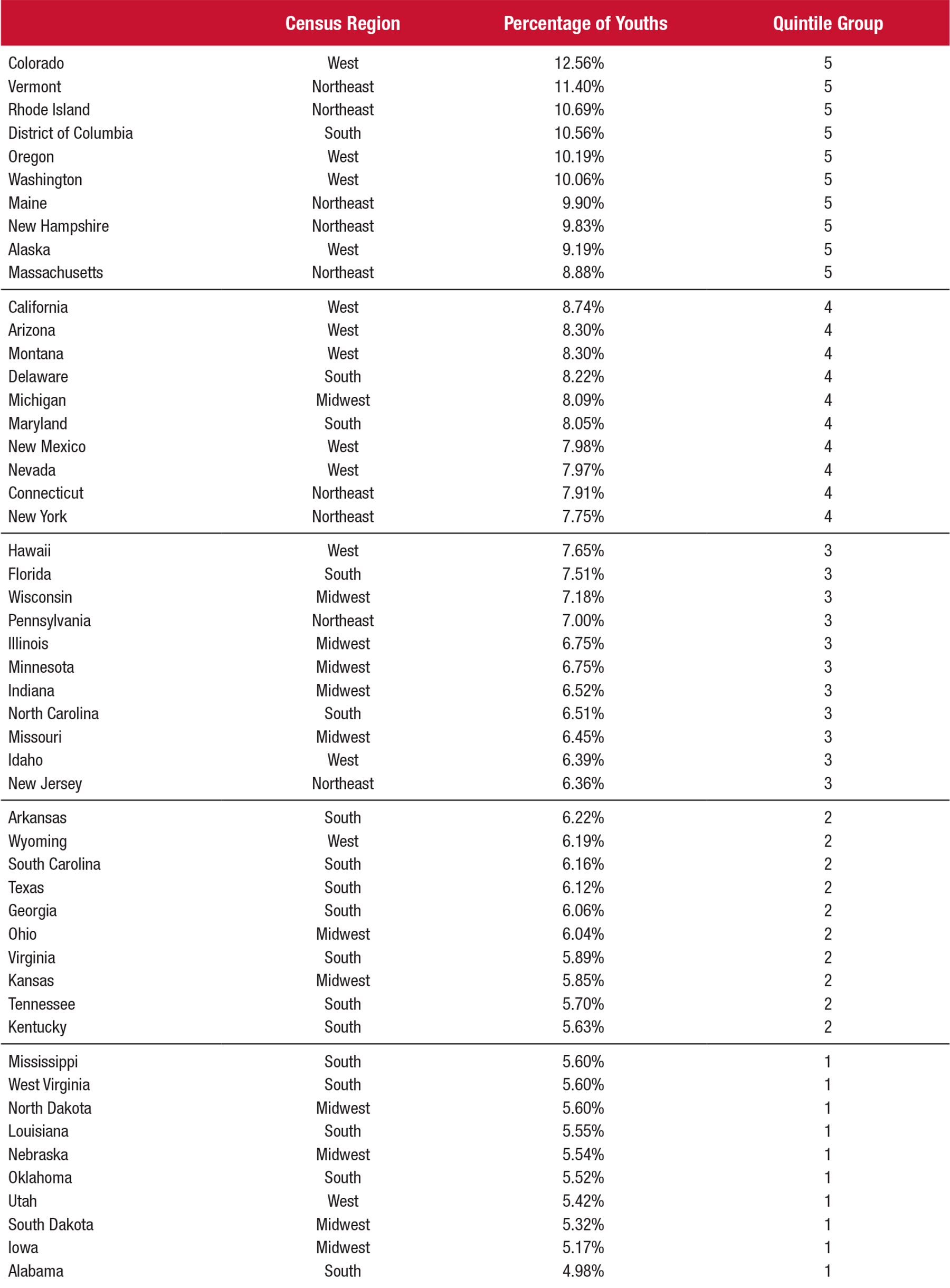
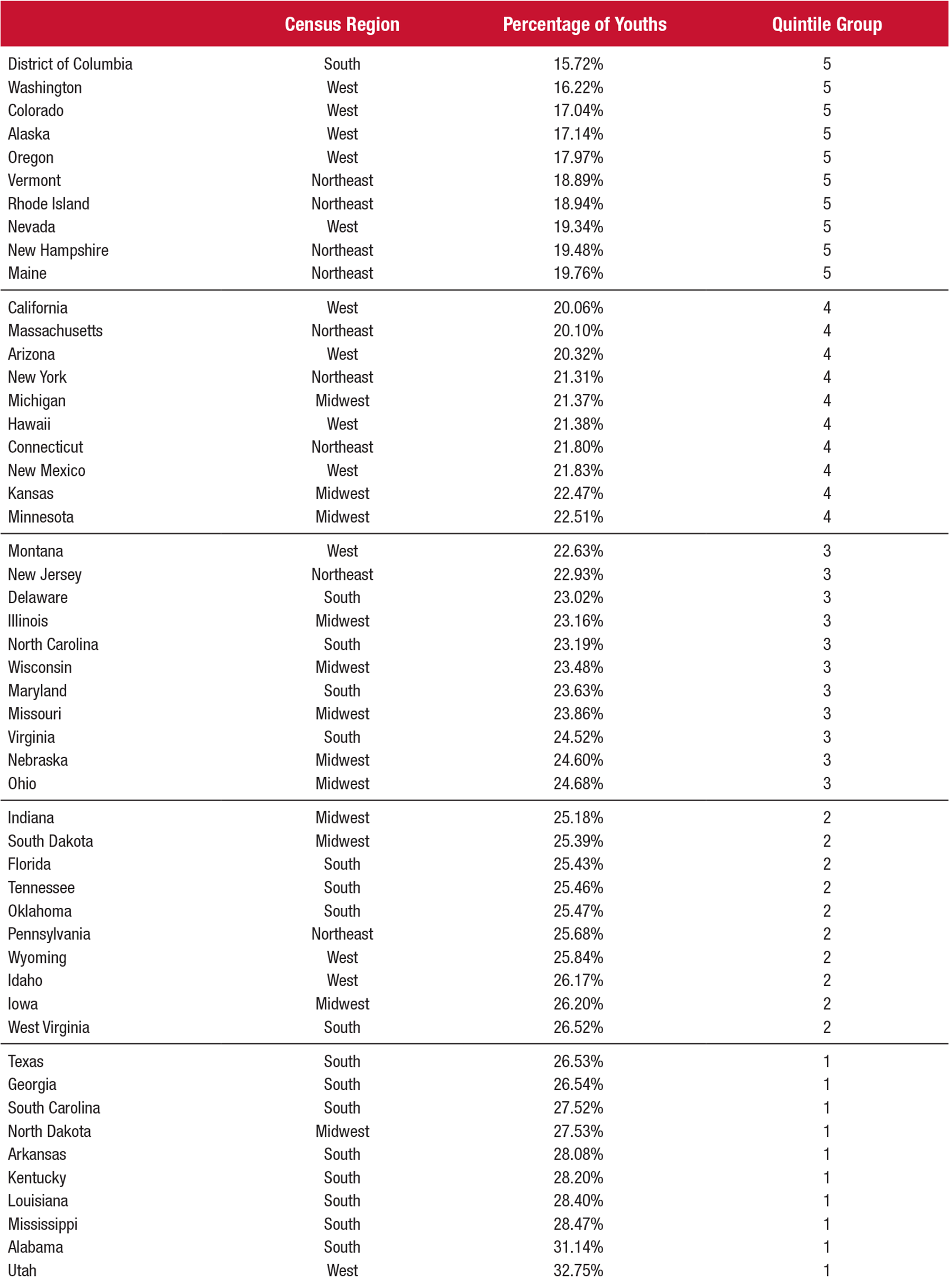
Estimates are displayed in U.S. maps and tables. To produce the marijuana use map (Figure 1), state estimates were first rank ordered from lowest to highest and then divided into quintiles (fifths). States with the lowest estimates (i.e., the lowest fifth) are assigned to the bottom quintile and are shown in dark blue. States with the highest estimates are assigned to the top quintile and are shown in dark red. All other states are assigned to one of three quintiles between the lowest and highest quintiles. Figure 2, the map showing perceived great risk from smoking marijuana monthly, was produced in a similar fashion, except that the rank ordering was done in reverse order so that the lower estimates of youths' perceptions of risk of marijuana use are assigned to the top quintile and are shown in dark red. Supporting tables associated with the maps (Tables S1 and S2) provide estimates that are rank ordered from highest to lowest and divided into quintiles (fifths).12
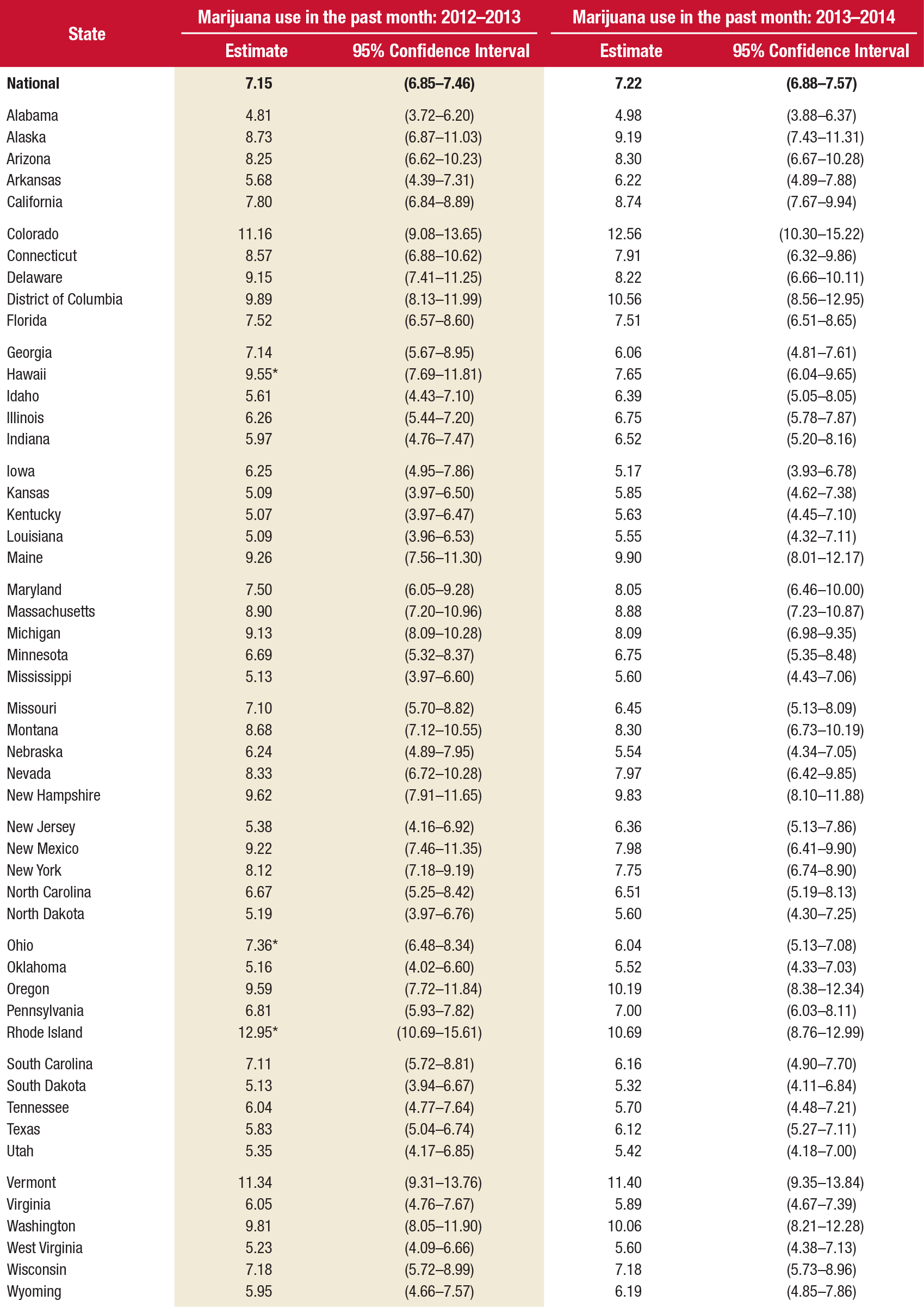
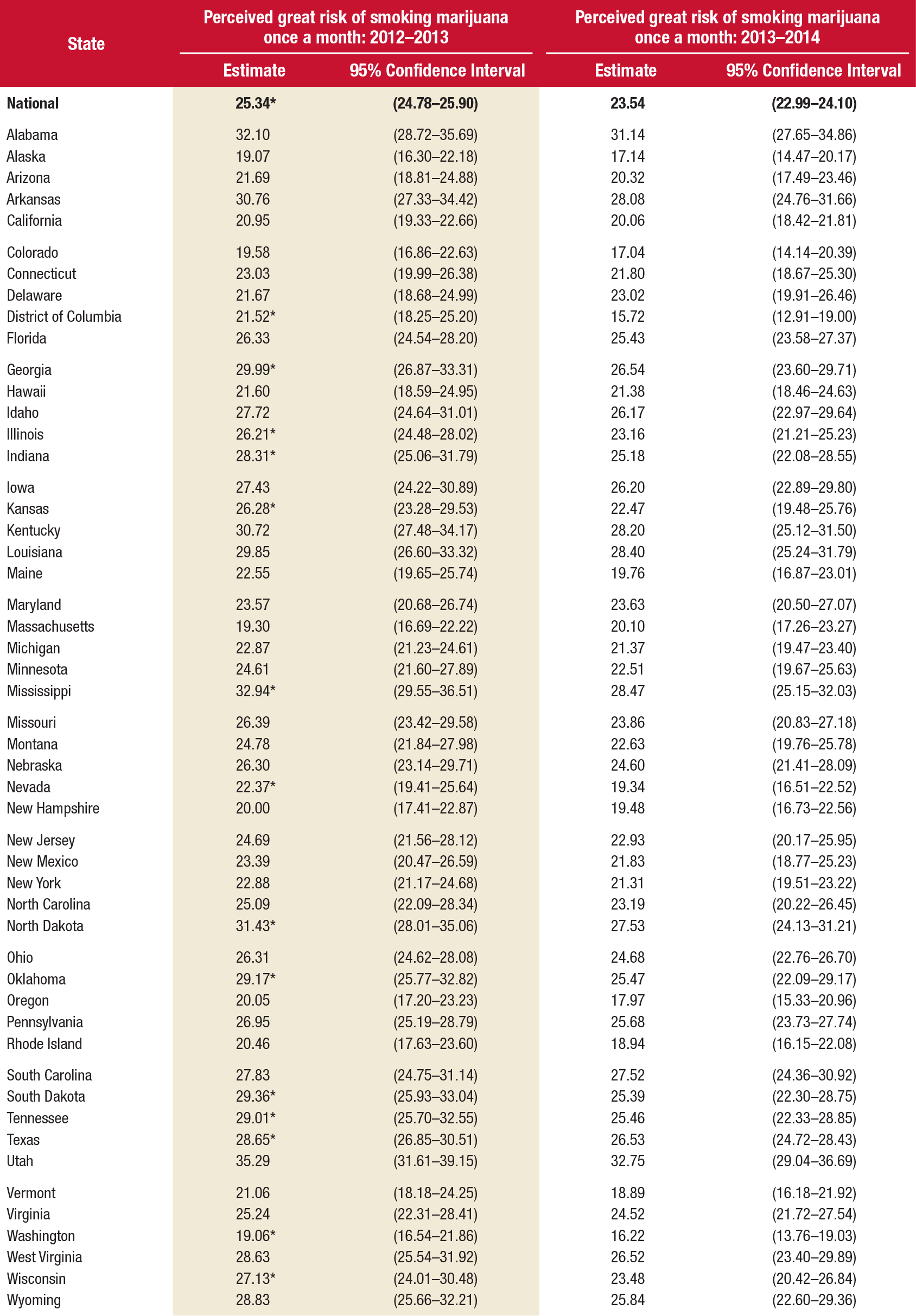
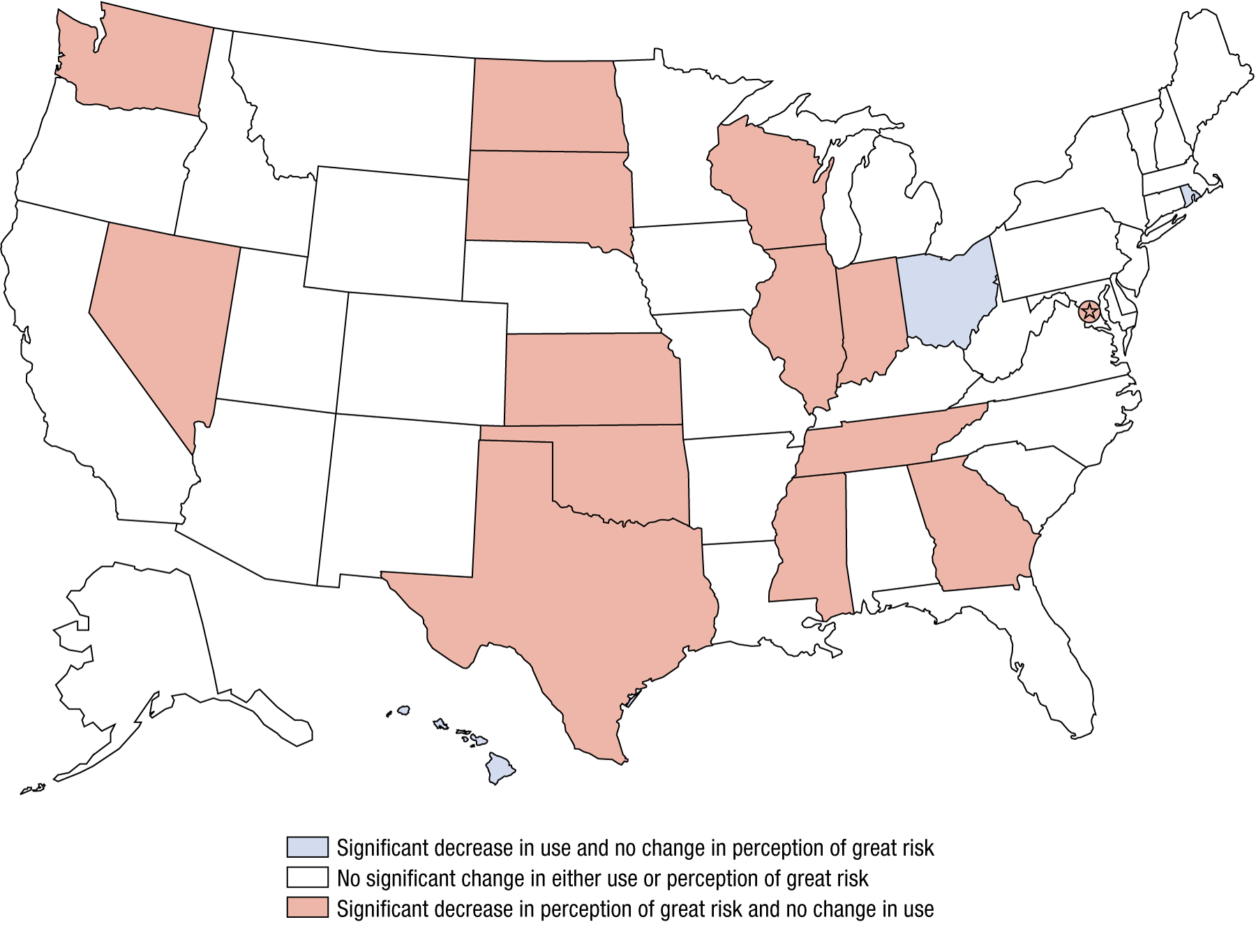
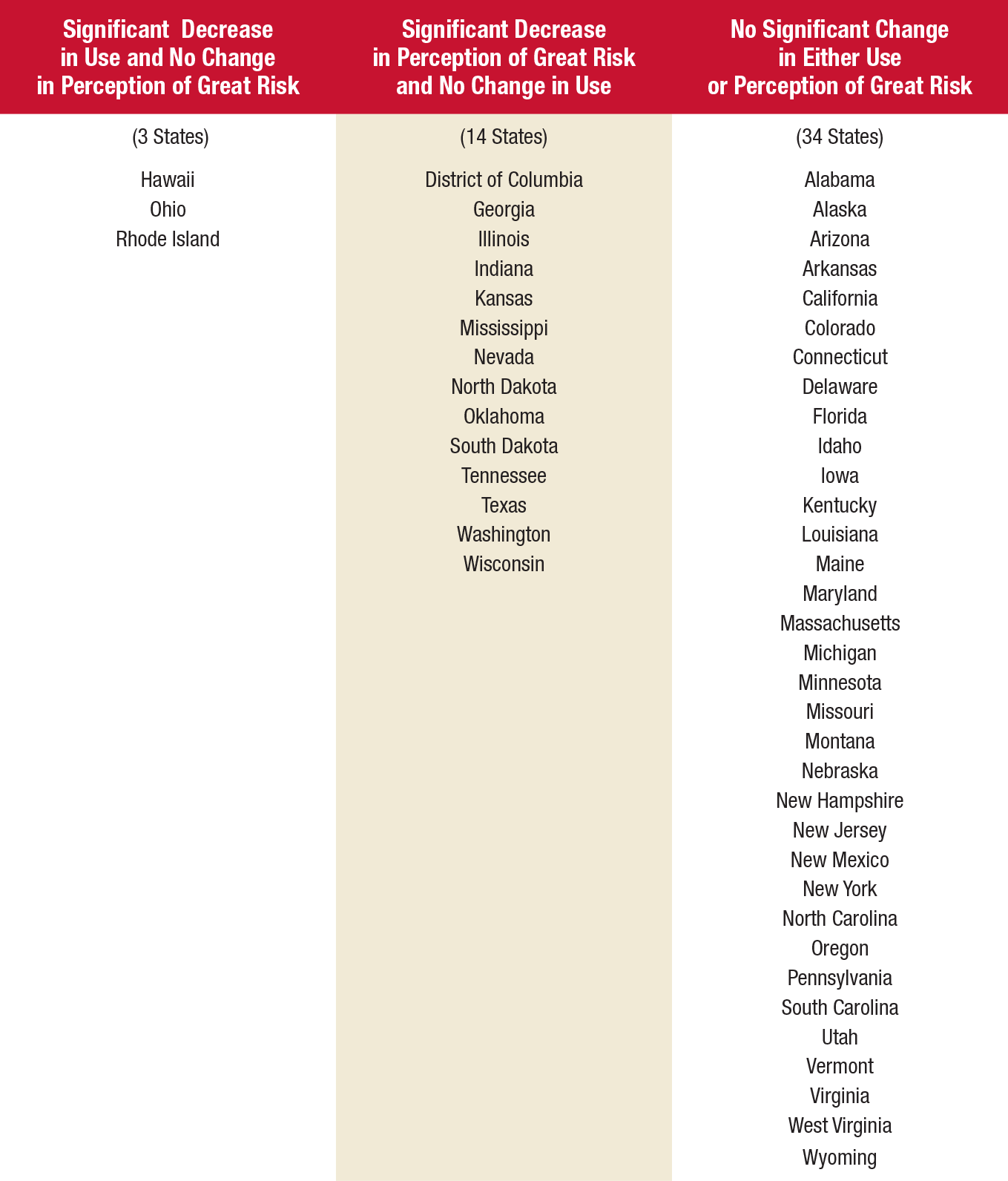
Tables 1 and 2 show comparisons between estimates for combined 2013–2014 data and estimates for combined 2012–2013 data to examine changes over time. In these tables, estimates for the states are listed alphabetically. Ninety-five percent confidence intervals are included as a measure of precision for each estimate. Figure 3 is a map summarizing these changes (supporting Table S3). The inclusion of a common year (i.e., 2013) in these comparisons increases the precision of the estimates and the ability to detect statistically significant differences between the two time periods. Statistically significant differences between 2013–2014 and 2012–2013 indicate average annual changes between 2012 and 2014. All changes discussed in this report are statistically significant at the .05 level.13
The combined 2013–2014 NSDUH data indicate that across the United States about 1 in 14 (7.22 percent) adolescents aged 12 to 17 used marijuana in the past month. This percentage corresponds to approximately 1.8 million adolescents using marijuana in the past month. Rates of adolescent past month marijuana use ranged from 4.98 percent in Alabama to 12.56 percent in Colorado (Figure 1; Table S1).
Figure 1. Marijuana use in the past month among youths aged 12 to 17, by state: percentages, annual averages, 2013-2014

Of the 10 states with the highest rates of past month marijuana use among adolescents, 5 were in the Northeast (Vermont, Rhode Island, Maine, New Hampshire, and Massachusetts), 4 were in the West (Colorado, Oregon, Washington, and Alaska), and 1 was in the South (District of
Columbia).14 Of the 10 states with the lowest rates of marijuana use among adolescents, 5 were in the South (Alabama, Oklahoma, Louisiana, West Virginia, and Mississippi), 4 were in the Midwest (Iowa, South Dakota, Nebraska and North Dakota), and 1 was in the West (Utah).
The combined 2013–2014 data indicate that about 5.9 million adolescents perceived great risk of harm from smoking marijuana once a month. This translates to about 1 in 4 adolescents (23.54 percent) perceiving a great risk of harm from monthly marijuana use. The perception of great risk from smoking marijuana once a month ranged from 15.72 percent in the District of Columbia to 32.75 percent in Utah (Figure 2; Table S2).
Figure 2. Perceptions of great risk of harm from smoking marijuana once a month among youths aged 12 to 17, by state: percentages, annual averages, 2013-2014

Of the 10 states with the lowest rates of perception of great risk from smoking marijuana once a month (i.e., states with fewer adolescents indicating there was a great risk of harm from monthly marijuana use), 5 were in the West (Washington, Colorado, Alaska, Oregon, and Nevada), 4 were in the Northeast (Vermont, Rhode Island, New Hampshire, and Maine), and 1 was in the South (District of Columbia). Of the 10 states with the highest rates of adolescent’s perception of great risk of harm from monthly marijuana use, 8 were in the South (Alabama, Mississippi, Louisiana, Kentucky, Arkansas, South Carolina, Georgia, and Texas), 1 was in the West (Utah), and 1 was in the Midwest (North Dakota).14
When combined 2012–2013 estimates are compared with combined 2013–2014 estimates, the nation as a whole did not experience a significant change in the rate of past month marijuana use among adolescents (7.15 percent in 2012–2013 and 7.22 percent in 2013–2014) (Table 1).
On an individual state level, three states experienced a statistically significant decrease in the rate of adolescent past month marijuana use (Hawaii: from 9.55 to 7.65 percent, Ohio: from 7.36 to 6.04 percent, and Rhode Island: from 12.95 to 10.69 percent). The remaining 47 states and the District of Columbia experienced no change in past month marijuana use.
Table 1. Marijuana use in the past month among youths aged 12 to 17, by state: percentages, annual averages, combined 2012–2013 and combined 2013–2014

Comparisons between the combined 2012–2013 and combined 2013–2014 NSDUH data indicate that there was a slight decrease at the national level in the adolescent rate of perception of great risk from smoking marijuana once a month (from 25.34 to 23.54 percent) (Table 2).
Table 2. Perceptions of great risk of harm from smoking marijuana once a month among youths age 12 to 17, by state: percentages, annual averages, combined 2012–2013 and combined 2013–2014

On an individual state level, 14 states experienced a statistically significant decline in the percentage of adolescents who perceived great risk from smoking marijuana (District of Columbia, Georgia, Illinois, Indiana, Kansas, Mississippi, Nevada, North Dakota, Oklahoma, South Dakota, Tennessee, Texas, Washington, and Wisconsin). Rates of perceived great risk in the remaining 37 states did not change.
Taken together, the three states that had a statistically significant decrease in past month adolescent marijuana did not have any change in adolescent’s rate of perception of great risk from smoking marijuana once a month (Figure 3; Table S3); these states are Hawaii, Ohio, and Rhode Island.13 The 14 states that had a significant decrease in adolescent’s rate of perception of great risk from smoking marijuana once a month did not experience any significant change in the rate of past month adolescent marijuana use. In 34 states, there were no statistically significant changes in either adolescent past month marijuana use or in adolescent perception of great risk from smoking marijuana.
Figure 3. States with significant change in past month marijuana use and perceptions of great risk of harm from smoking marijuana once a month among youths aged 12 to 17: combined 2012–2013 versus combined 2013–2014

Monitoring trends in adolescent marijuana use remains a concern both across the states and in the nation as a whole because of the health risks associated with youth marijuana use.2 The NSDUH data in this report show that youth marijuana use remained unchanged in 48 states and declined in 3 states between 2012–2013 and 2013–2014. However, 14 states saw a decline in the percentage of adolescents’ perceived great risk in smoking marijuana once a month. Declines in adolescent perceptions of risk matter because, as seen from Tables 1 and 2, there is a significant negative relationship between adolescent marijuana use and perceived great risk at the state level. That is, states with higher rates of marijuana use were more likely to have lower percentages of adolescents who think there is great risk in using marijuana, whereas states with lower rates of use tend to have higher percentages of adolescents who think there is great risk in using marijuana.15
Changing attitudes toward substance use has historically been a way to reduce substance use among youths.8 However, the 2013–2014 NSDUH data indicate that youths' perceptions of risk have decreased in many states, although the rates of marijuana use among youths have remained the same in nearly every state. Although there has not been a corresponding increase in adolescent marijuana use, the decline in adolescent perceptions of the riskiness of marijuana use still remains concerning because approximately 3,300 adolescents aged 12 to 17 initiated marijuana use each day in 2014.8
Across the nation in 2013–2014, approximately 1.8 million adolescents were past month marijuana users, and about three-fourths of adolescents across all states did not think there was great risk of harm from using marijuana. Highlighting the prevalence of adolescent marijuana use and attitudes toward use at the state level may help state and local prevention specialists in their efforts to raise awareness about marijuana use among youths and its consequences. As states continue to examine their laws regarding marijuana use, monitoring state-level trends in adolescent marijuana use and attitudes toward use may also help state and local policymakers plan for and allocate resources to address adolescent marijuana use. For more information on addressing marijuana use among youths, see https://www.samhsa.gov/capt/tools-learning-resources/youth-marijuana-risk-protective-factor-resources.
The combined 2013–2014 NSDUH state estimates of past month marijuana use, perceived great risk from monthly marijuana use, and 23 additional behavioral health measures are available online at https://www.samhsa.gov/data/. The 23 additional measures are substance use and mental health outcomes, including initiation and use of illicit drugs (e.g., marijuana initiation, cocaine use, and nonmedical use of prescription pain relievers); alcohol and tobacco use; perceived great risk of harm associated with alcohol and cigarette use; substance use disorders; needing but not receiving treatment for a substance use problem; serious mental illness; any mental illness; depression; and suicidal thoughts. National maps for all outcomes and detailed tables including percentages and counts for each state, census region, and the nation, by age group, also are provided as well as the methodology that generated the state estimates.
Hughes, A., Lipari, R.N., & Williams, M. The CBHSQ Report: State Estimates of Adolescent Marijuana Use and Perceptions of Risk of Harm From Marijuana Use: 2013 and 2014. Rockville, MD: Substance Abuse and Mental Health Services Administration, Center for Behavioral Health Statistics and Quality.
Table S1. Marijuana use in the past month among youths aged 12 to 17, by quintile group and state: percentages, annual averages, 2013–2014

Table S2. Perceptions of great risk of harm from smoking marijuana once a month among youths aged 12 to 17, by quintile group and state: percentages, annual averages, 2013–2014

Table S3. States with significant change in past month marijuana use and perceptions of great risk of harm from smoking marijuana once a month among youths aged 12 to 17: 2012–2013 versus 2013–2014