Chapter 3
Topics of Special Interest
Adolescent Admissions to Substance Abuse Treatment
Trends in Heroin Admissions and Medication-Assisted Opioid Therapy
Polydrug Abuse
Racial/Ethnic Subgroups
This chapter highlights topics that are of current or special interest. It is important to note that percentages in charts, narrative lists, and percentage distributions in tables may not add to 100 percent due to rounding.
- Adolescent substance abuse 2001-2011
TEDS data indicate that admissions to substance abuse treatment aged 12 to 17 increased by 9 percent (from 145,438 to 157,896) between 2001 and 2002, but declined by 13 percent (to 137,868) between 2002 and 2011 [Table 3.1a]. In 2011, 88 percent of adolescent treatment admissions involved marijuana as a primary or secondary substance, and 39 percent of these marijuana-involved admissions were referred to treatment through the criminal justice system [Table 3.4].
- Heroin admissions and medication-assisted opioid therapy 2001-2011
The number of TEDS admissions for primary heroin abuse decreased by 21 percent between 2001 and 2007 then increased by 32 percent between 2007 and 2011 [Table 3.1a].
The proportion of heroin admissions whose treatment plans included medication-assisted opioid therapy (opioid therapy using methadone or buprenorphine) declined from 36 percent in 2001 to 27 percent in 2011 [Table 3.7].1
Polydrug abuse (the use of more than one substance) was more common among TEDS admissions than was abuse of a single substance [Table 3.8].
TEDS data indicate that substance abuse patterns differed widely among racial/ethnic subgroups; however, alcohol was the predominant substance for all racial/ethnic groups except persons of Puerto Rican origin, where the predominant substance was heroin [Table 2.2].
1
Adolescent Admissions to Substance Abuse Treatment
Tables 3.1a and 3.1b and Figure 19. The number of adolescent admissions aged 12 to 17 increased by 9 percent from 2001 to 2002, then declined by 13 percent from 2002 to 2011.
- Two primary substances—marijuana and alcohol—accounted for between 83 and 89 percent of adolescent admissions from 2001 to 2011.
- Marijuana admissions increased from 62 percent of adolescent admissions in 2001 to 75
percent in 2011. The number of adolescent marijuana admissions increased by 14 percent
between 2001 and 2011.
- Alcohol admissions declined from 23 percent of adolescent admissions in 2001 to 14 percent in 2011.
- Methamphetamine/amphetamine admissions increased from 3 percent in 2001 to 6 percent in 2005, but then decreased to 2 percent in 2011.
- Opiate admissions represented 1 to 2 percent of adolescent admissions from 2001 to 2008 but rose to 3
percent in 2009 where it remained in 2011.
- Opiates other than heroin2 represented 29 percent of adolescent opiate admissions in 2001 but rose to 66 percent in 2011.
- Cocaine accounted for between 2 and 3 percent of adolescent admissions between 2001 and 2008. Beginning in 2009, cocaine accounted for 1 percent of adolescent admissions.
- All other substances combined accounted for 2 to 3 percent of adolescent admissions between 2001 and 2011.
2
Figure 19. Adolescent admissions aged 12 to 17, by primary substance: 2001-2011
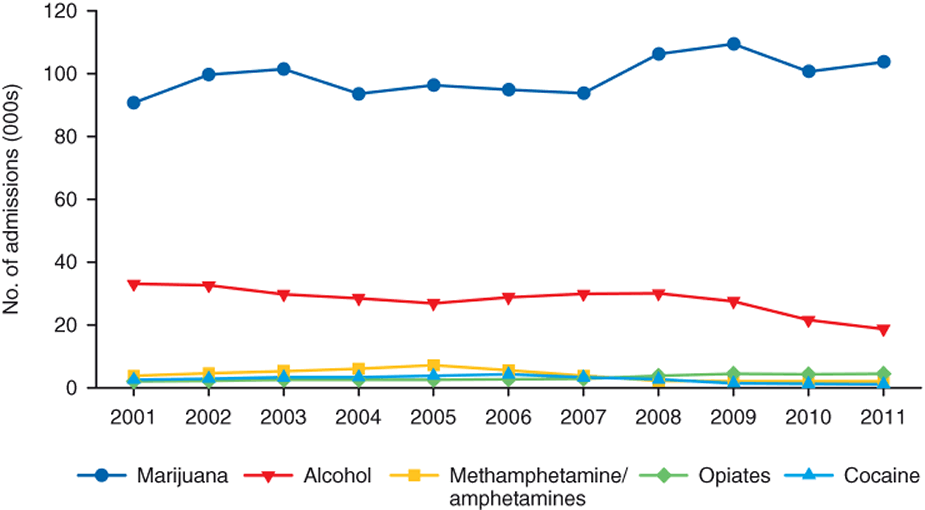
Table 3.2. In 2011, overall 72 percent of adolescent admissions were male, a proportion heavily influenced by the 78 percent of marijuana admissions that were male. The proportion of female admissions was greater than 40 percent for most other substances. There were more female than male adolescent admissions for methamphetamine/amphetamines (56 percent vs. 44 percent).
Forty-five percent of adolescent admissions were non-Hispanic White, 24 percent were of Hispanic origin, 20 percent were non-Hispanic Black, and 10 percent were of other racial/ethnic groups.
Table 3.3. The number of adolescent admissions increased with age; 1 percent were 12 years old, increasing to 32 percent who were 17 years old. Among admissions for inhalants, 18 percent were aged 12 or 13. Among admissions for heroin and for opiates other than heroin, 60 percent and 52 percent, respectively, were age 17.
In 2011, 43 percent of adolescent admissions were referred to treatment through the criminal justice system, 17 percent were self- or individual referrals, and 14 percent were referred through schools.
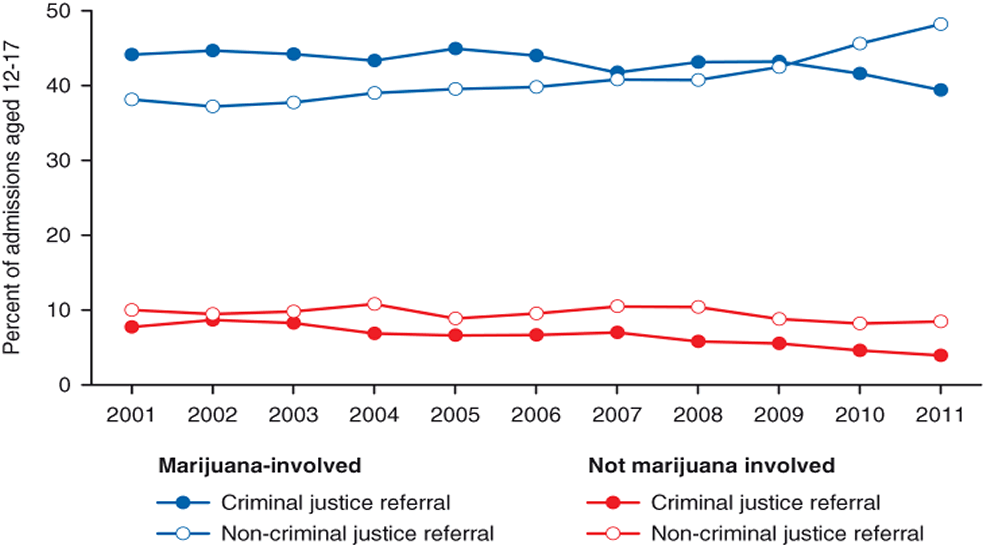
Table 3.4 and Figure 20. An admission was considered marijuana-involved if marijuana was reported as a primary, secondary, or tertiary substance. In 2001, 44 percent of all adolescent admissions were marijuana involved and referred to treatment by the criminal justice system, and 38 percent were marijuana involved but referred by other sources. By 2011, the proportion referred by the criminal justice system decreased to 39 percent, while the proportion referred by other sources increased to 48 percent. The proportions nearly converged in 2007 and 2009.
Adolescent admissions not involving marijuana that were referred by the criminal justice system fell from 8 percent in 2001 to 4 percent in 2011. Admissions not involving marijuana that were
referred from other sources were fairly stable, at between 8 and 11 percent of adolescent admissions.
Figure 20. Adolescent admissions aged 12 to 17, by marijuana involvement and
criminal justice referral: 2001-2011
Trends in Heroin Admissions and Medication-Assisted Opioid Therapy
General measures of heroin abuse among treatment admissions aged 12 and older were relatively consistent from 2001 through 2011. Primary heroin abuse accounted for 14 to 16 percent of TEDS admissions in every year from 2001 through 2011 [Table 1.1b]. In 2011, injection was the preferred route of administration for 70 percent of primary heroin admissions, inhalation for 25 percent, and smoking or other route for 4 percent [Table 2.4]. The majority of primary heroin admissions from 2001 to 2011 were 20 to 34 years of age or older (41 to 43 percent from 2001 through 2007 and 53 percent in 2011) [Table 3.5].
However, these measures conceal substantial changes in the age, race/ethnicity, and route of
administration of some subpopulations among heroin-using admissions.
Table 3.5 and Figure 21. TEDS data show an increase in heroin admissions among young non-Hispanic White adults. Among non-Hispanic Blacks, however, admissions have declined except among older admissions.
- In 2001, just over 1 in 5 heroin admissions (23 percent) were non-Hispanic White aged 20 to 34. By 2011, more than 2 in 5 primary heroin admissions (43 percent) belonged to this subgroup. The proportion of primary heroin admissions who were non-Hispanic White aged 35 to 44 fell from 14 percent to 9 percent in the same period, while the proportions of non-Hispanic White admissions aged 12 to 19 and older than 45 remained constant, at 2 to 3 percent and 7 to 8 percent, respectively.
- In contrast, the proportion of primary heroin admissions that were non-Hispanic Black aged 20 to 34 fell from 6 percent to 2 percent between 2001 and 2011, while the proportion aged 35 to 44 fell from 10 percent to 5 percent. However, the proportion of non-Hispanic Black admissions aged 45 and older increased from 8 percent in 2001 to 10 percent in 2011. Non-Hispanic Black admissions aged 12 to 19 accounted for one-tenth of 1 percent of all primary heroin admissions.
Figure 21. Heroin admissions aged 12 and older,
by age group and race/ethnicity: 2001-2011
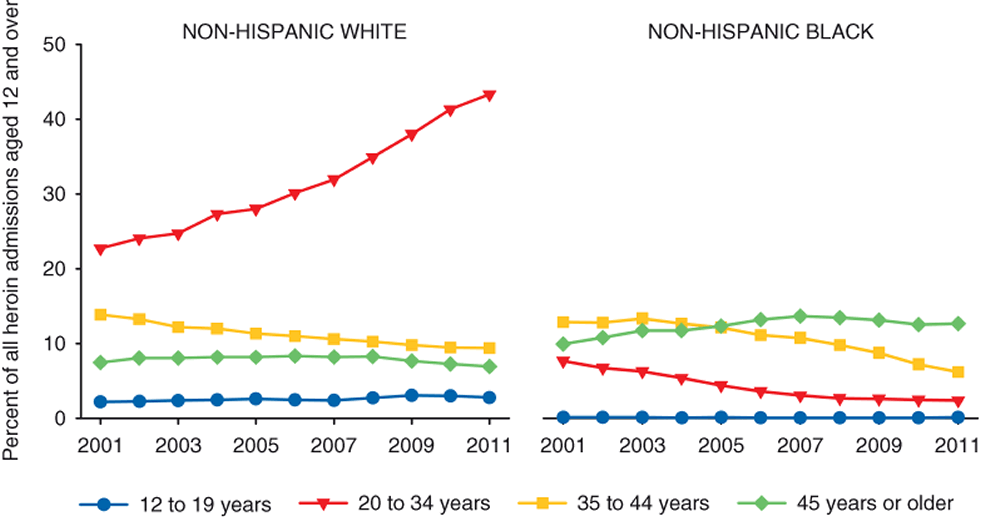
Table 3.6 and Figure 22. Route of administration of heroin was closely linked to age. Injection
increased among young adults; inhalation increased among those 45 and older.
- In 2001, 1 in 4 primary heroin admissions (25 percent) were injectors aged 20 to 34 and 1 in 5 (20 percent) were injectors aged 35 to 44. By 2011, more than 2 in 5 primary heroin admissions (42 percent) were injectors aged 20 to 34, but the proportion that were injectors aged 35 to 44 had dropped to 13 percent.
- The proportion of primary heroin admissions who were inhalers aged 20 to 34 fell from 14 percent in 2001 to 8 percent in 2011, while the proportion who were inhalers aged 45 and older rose from 6 percent in 2001 to 10 percent in 2011.
Figure 22. Heroin admissions aged 12 and older,
by route of administration and age group: 2001-2011
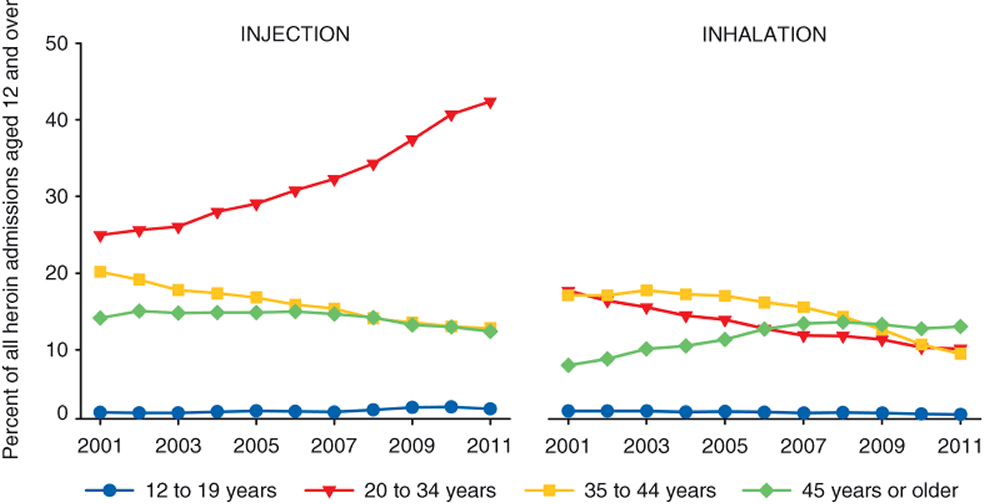
Table 3.7 and Figures 23 and 24. Planned use of medication-assisted opioid therapy (opioid therapy using methadone or buprenorphine) declined among TEDS admissions for heroin abuse between 2001 and 2011.
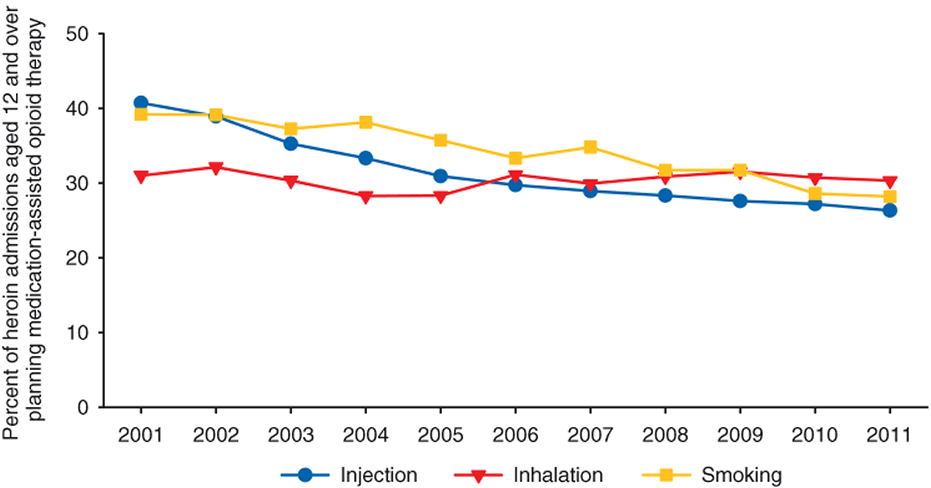
- Table 3.7 and Figure 23. In 2001, 36 percent of primary heroin admissions overall had treatment plans that included medication-assisted opioid therapy, although the proportion varied by route of administration—41 percent of heroin injectors, 39 percent of heroin smokers, and 31 percent of heroin inhalers. By 2011, only 27 percent of primary heroin admissions had treatment plans that included medication-assisted opioid therapy, with 26 percent being heroin injectors, 30 percent being inhalers, and 28 percent being smokers (see footnote 1 on page 27).
.
Figure 23. Heroin admissions aged 12 and older receiving medication-assisted opioid therapy, by route of heroin administration: 2001-2011
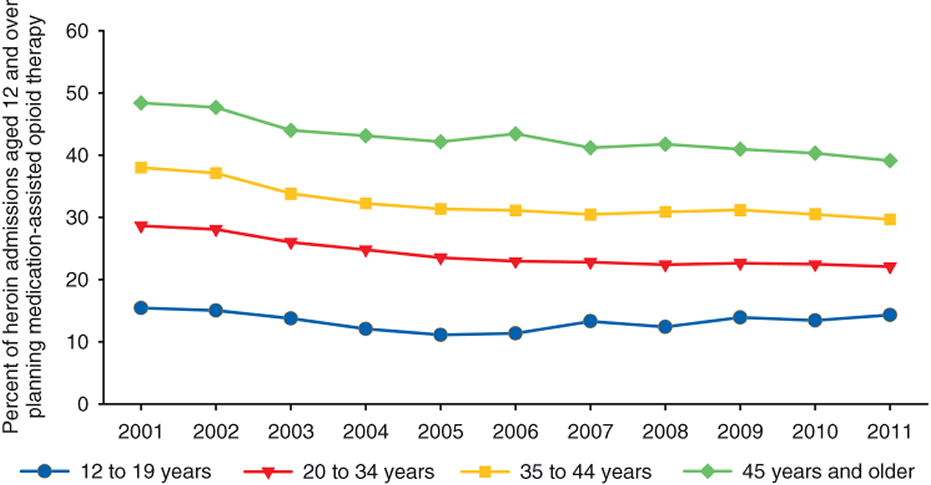
- Figure 24. Older heroin admissions were most likely to have medication-assisted opioid therapy planned. In 2001, opioid therapy was planned for 48 percent of admissions aged 45 and older, 38 percent of those aged 35 to 44, 29 percent of those aged 20 to 34, and 15 percent of those aged 12 to 19. The proportions fell for all age groups, and by 2011, opioid therapy was planned for 39 percent of primary heroin admissions aged 45 and older, 30 percent of those aged 35 to 44, 22 percent of those aged 20 to 34, and 14 percent of those aged 12 to 19.
Figure 24. Heroin admissions aged 12 and older receiving medication-assisted opioid therapy, by age group: 2001-2011
Polydrug Abuse
Polydrug abuse (the use of more than one substance) was more common among TEDS admissions than was abuse of a single substance.
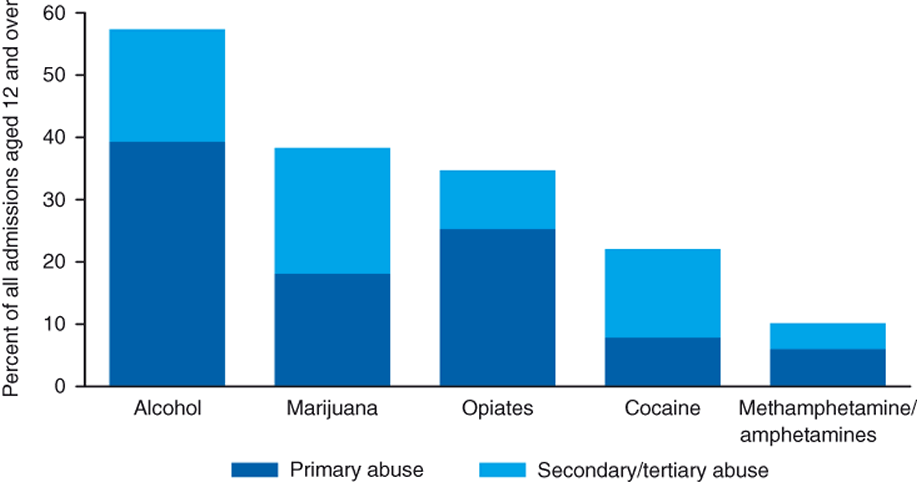
Table 3.8 and Figure 25. Polydrug abuse was reported by 55 percent of TEDS admissions aged 12 or older in 2011. Marijuana, alcohol, and cocaine were the most commonly reported secondary and tertiary substances.
Abuse of alcohol as a primary, secondary, or tertiary substance was characteristic of most treatment admissions. Thirty-nine percent of all treatment admissions were for primary alcohol abuse, and 18 percent of admissions for primary drug abuse reported that they also had an alcohol problem. Overall, 57 percent of all treatment admissions reported alcohol as a substance of abuse.
- Alcohol, opiates, and methamphetamine/amphetamines were reported more often as primary substances than as secondary or tertiary substances. Thirty-five percent of all admissions
involved opiate abuse, with 25 percent reporting primary abuse and 9 percent reporting secondary or tertiary abuse. Ten percent of all admissions reported methamphetamine/amphetamine abuse, with 6 percent reporting primary abuse and 4 percent reporting secondary or tertiary abuse.
- Marijuana and cocaine were reported more often as secondary or tertiary substances than as primary substances. Marijuana was reported as a primary substance by 18 percent of all admissions, but was a secondary or tertiary substance for another 20 percent, so that 38 percent of all treatment admissions reported marijuana as a substance of abuse. Cocaine was a primary
substance for 8 percent of admissions, but was a secondary or tertiary substance for an additional 14 percent. Thus 22 percent of all treatment admissions involved cocaine abuse.
Table 3.9.This table details the most common substance combinations for selected primary
substances. For example, for primary alcohol admissions, 55 percent reported abuse of alcohol alone, 15 percent reported abuse of alcohol and marijuana but no other drugs, and 5 percent reported primary abuse of alcohol with abuse of cocaine and marijuana as secondary and tertiary substances.
Figure 25. Primary and secondary/tertiary substance of abuse: 2011
Racial/Ethnic Subgroups
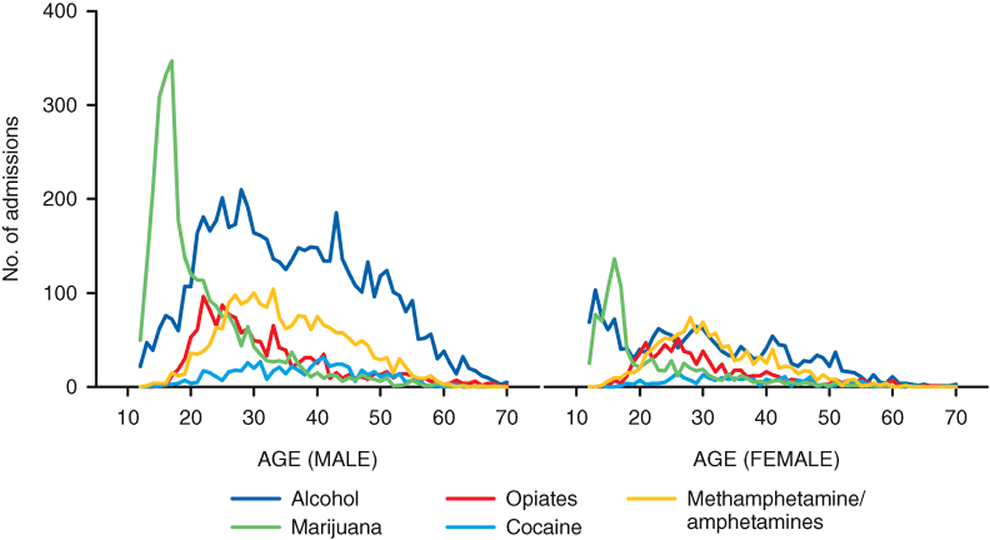
Table 2.3b and Figures 26-31. TEDS data indicate that substance abuse patterns differed widely among racial/ethnic subgroups. Among admissions of Hispanic origin, substance abuse patterns differed according to country of origin. Patterns also differed between men and women within subgroups.
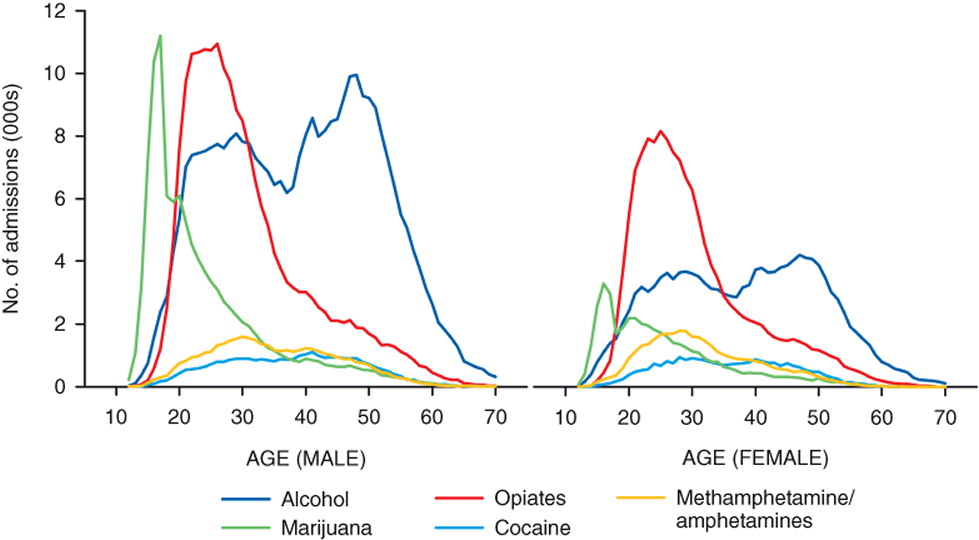
- Among non-Hispanic Whites [Figure 26], alcohol was the primary substance reported by 45 percent of male admissions and 35 percent of female admissions.
- Opiates and marijuana were the most frequently reported illicit drugs among non-Hispanic White male admissions (28 percent and 15 percent, respectively), followed by methamphetamine/amphetamines (5 percent) and cocaine (4 percent).
- Among non-Hispanic White female admissions, opiates were the primary illicit drug (35 percent), followed by marijuana (11 percent), methamphetamine/amphetamines (9 percent), and cocaine (6 percent).
Figure 26. White (non-Hispanic) admissions,
by gender, primary substance, and age: 2011
- Among non-Hispanic Blacks [Figure 27], 37 percent of male admissions used alcohol as the
primary substance. Among non-Hispanic Black female admissions, alcohol (28 percent) was more
frequently reported as a primary substance than was cocaine (24 percent).
- Marijuana and cocaine were the most commonly reported illicit substances for non-Hispanic Black male admissions (30 percent and 16 percent, respectively), followed by opiates (13 percent).
- For non-Hispanic Black female admissions, other primary substances were cocaine and marijuana (24 percent each).
- Methamphetamine/amphetamines were reported by about 1 percent each of non-Hispanic Black female and male admissions.
Figure 27. Black (non-Hispanic) admissions,
by gender, primary substance, and age: 2011
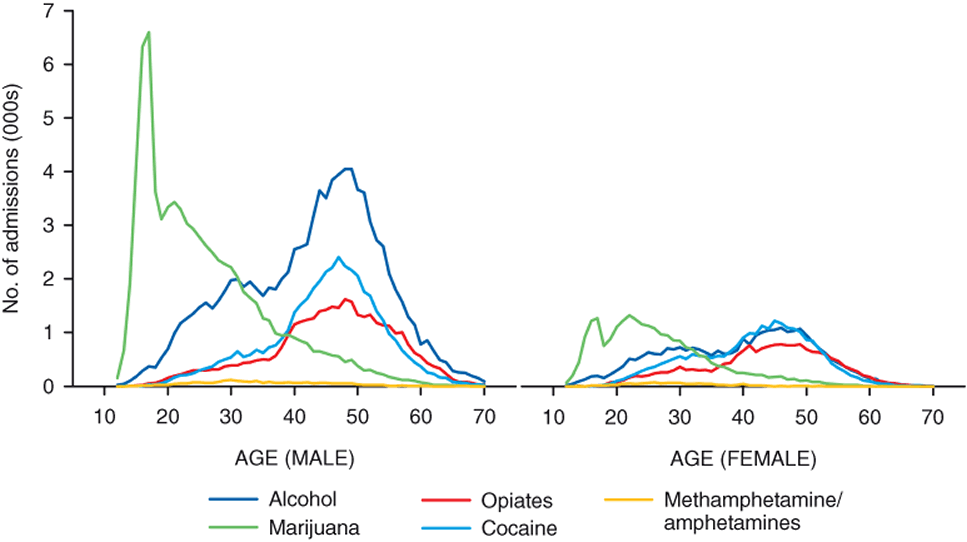
- Among persons of Mexican origin [Figure 28], alcohol was the primary substance reported by 40 percent of male admissions, but among female admissions, methamphetamine/amphetamines were reported as a primary substance as frequently as was alcohol (29 percent each).
- Marijuana (29 percent) was the most commonly reported illicit substance for male admissions of Mexican origin, followed by methamphetamine/amphetamines and opiates (13 percent each).
- For female admissions of Mexican origin, other commonly reported primary substances were marijuana (22 percent), opiates (14 percent), and cocaine (4 percent).
Figure 28. Mexican origin admissions,
by gender, primary substance, and age: 2011
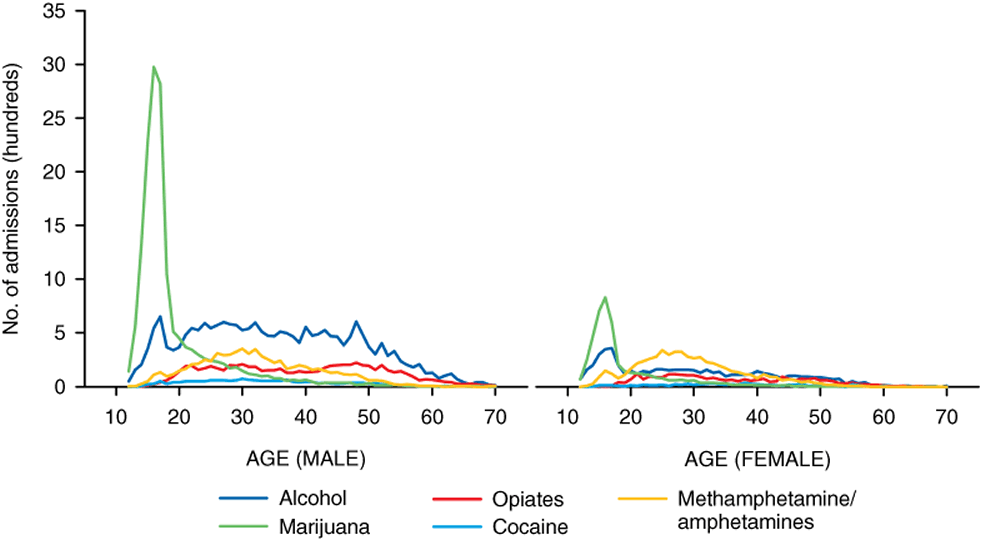
- Among admissions of Puerto Rican origin [Figure 29], opiates were the main primary
substances at treatment admission for both men and women (42 percent and 34 percent, respectively), followed by alcohol (31 percent and 27 percent, respectively).
- For both male and female admissions of Puerto Rican origin, other primary substances were marijuana (16 percent and 20 percent, respectively) and cocaine (8 percent and 13 percent, respectively).
- Admissions for primary methamphetamine/amphetamine abuse were 1 percent for women of Puerto Rican origin and less than 1 percent for men of Puerto Rican origin.
Figure 29. Puerto Rican origin admissions,
by gender, primary substance, and age: 2011
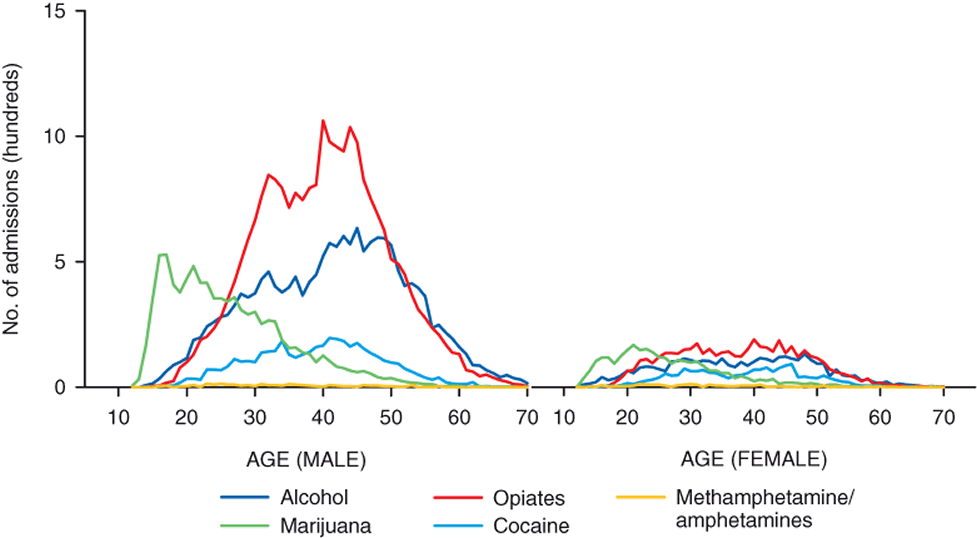
- American Indians and Alaska Natives together accounted for 2 percent of all TEDS admissions [Table 2.2] [Figure 30]. Among American Indian/Alaska Native admissions, 69 percent of men and 54 percent of women entered treatment because of primary alcohol abuse.
- Marijuana was the most frequently reported illicit substance for American Indian or Alaska Native male admissions (14 percent), followed by opiates (8 percent), methamphetamine/amphetamines (5 percent), and cocaine (2 percent).
- Opiates and marijuana were the most frequently reported illicit substances for American Indian or Alaska Native female admissions (17 percent and 13 percent, respectively),
followed by methamphetamine/amphetamines (10 percent) and cocaine (4 percent).
Figure 30. American Indian/Alaska Native admissions,
by gender, primary substance, and age: 2011
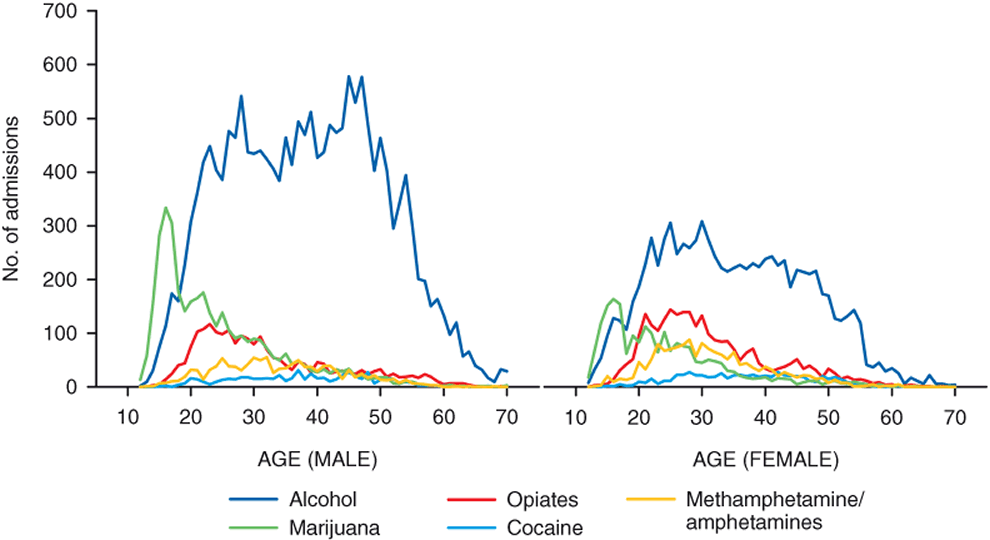
- Asians and Pacific Islanders accounted for 1 percent of all TEDS admissions [Table 2.2]. Among this group [Figure 31], alcohol was the primary substance reported by 44 percent of male admissions and 37 percent of female admissions.
- Marijuana and methamphetamine/amphetamines were the most commonly reported illicit drugs for Asian or Pacific Islander male admissions (22 percent and 16 percent, respectively), followed by opiates (11 percent) and cocaine (5 percent).
- For Asian or Pacific Islander female admissions, methamphetamine/amphetamines were the most commonly reported illicit substance (23 percent), followed by marijuana (18 percent), opiates (14 percent), and cocaine (5 percent).
Figure 31. Asian/Pacific Islander admissions,
by gender, primary substance, and age: 2011
TO TABLES
