Chapter 1
Trends in Substance Abuse Treatment Admissions
Aged 12 and Older: 2001 - 2011
Trends in Primary Substance of Abuse: 2001-2011
Trends in the Co-Abuse of Alcohol and Drugs
Trends in Demographic Characteristics
Trends in Employment Status
This report presents national-level data from the Treatment Episode Data Set (TEDS) for
admissions in 2011 and trend data for 2001 to 2011. It is a companion to the report Treatment Episode Data Set (TEDS): 2001-2011 State Admissions to Substance Abuse Treatment. These
reports provide information on the demographic and substance abuse characteristics of admissions to treatment aged 12 and older for abuse of alcohol and/or drugs in facilities that report to individual State administrative data systems. Data include records for admissions during calendar years 2001 through 2011 that were received and processed through October 15, 2012.1 It is important to note that percentages in charts, narrative lists, and percentage distributions in tables may not add to 100 percent due to rounding.
TEDS is an admission-based system, and TEDS admissions do not represent individuals. Thus, an individual admitted to treatment twice within a calendar year would be counted as two admissions.
TEDS does not include all admissions to substance abuse treatment. It includes admissions at facilities that are licensed or certified by the State substance abuse agency to provide substance abuse treatment (or are administratively tracked for other reasons). In general, facilities reporting TEDS data are those that receive State alcohol and/or drug agency funds (including Federal Block Grant funds) for the provision of alcohol and/or drug treatment services. Additional information on the history and methodology of TEDS and this report, as well as important issues related to State data collection systems are detailed in Appendix A.
This chapter details trends in the annual numbers and rates of admissions aged 12 and older for 2001 to 2011. Trend data are invaluable in monitoring changing patterns in substance abuse treatment admissions. These patterns reflect underlying changes in substance abuse in the population as well as changing priorities in the treatment/reporting system.
1
Trends in Primary Substance of Abuse: 2001-2011
Admissions can report up to three substances of abuse. These represent the substances that led to the treatment episode and are not necessarily a complete enumeration of all substances used at the time of admission. Most of the information in this report is based on an admission’s primary
substance of abuse. (See Appendix A for more details.)
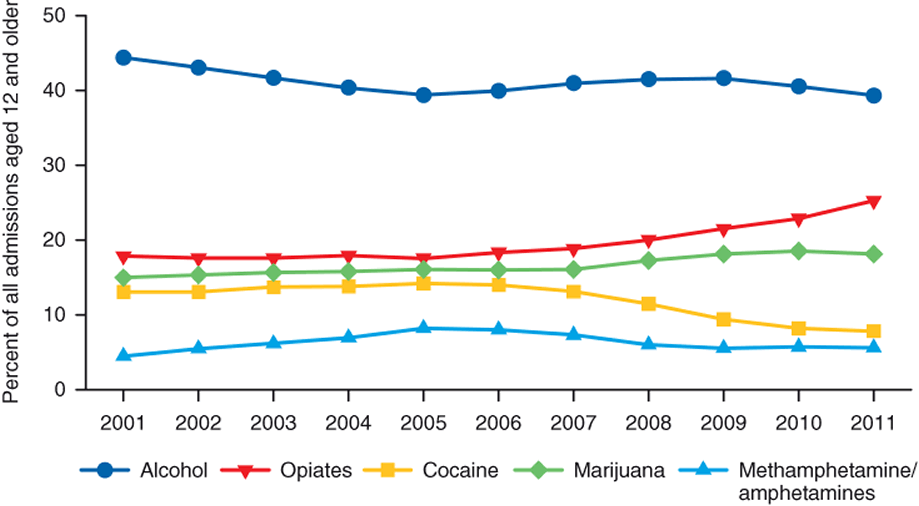
Tables 1.1a-b and Figure 1. The number of admissions aged 12 and older increased by 4 percent from 2001 to 2011. The U.S. population aged 12 and older increased by 10 percent during this time period.
- Between 2001 and 2011, five substance groups accounted for 96 percent of the primary substances of abuse reported by TEDS treatment admissions aged 12 and older: alcohol, opiates (primarily heroin), marijuana, cocaine, and methamphetamine/amphetamines. However, the proportions of admissions by primary substance changed considerably over that period:
- Alcohol admissions aged 12 and over fluctuated between 2001 and 2011 from a high of 44 percent in 2001 to a low of 39 percent in 2005 and 2011. In 2011, 45 percent of primary alcohol admissions aged 12 and older reported secondary drug abuse as well.
- Opiate admissions increased from 18 percent of admissions aged 12 and older in 2001 to 25 percent in 2011.
- Admissions for primary heroin were fairly steady over this time period: they were 16 percent of admissions aged 12 and older in 2001, 15 percent from 2002 to 2004, and 14 percent from 2005 to 2010, and 15 percent in 2011. Heroin represented 88 percent of all opiate admissions in 2001 but declined steadily to 60 percent in 2011.
- Opiates other than heroin2 increased from 2 percent of admissions aged 12 and older in 2001 to 10 percent in 2011. Opiates other than heroin represented 12 percent of all
opiate admissions in 2001 but rose steadily to 40 percent in 2011.
- Marijuana admissions increased from 15 percent of admissions aged 12 and older in 2001 to 18 percent in 2011.
- Cocaine admissions declined from 13 percent of admissions aged 12 and older in 2001 to 8 percent in 2011. Smoked cocaine (crack) represented 69 percent of all primary cocaine admissions in 2011, down from 73 percent in 2001.
- Stimulant admissions (98 to 99 percent of these admissions were for methamphetamine or amphetamine abuse) increased from 5 percent of admissions aged 12 and older in 2001 to 9 percent in 2005, but then decreased to 6 percent in 2011.
- Tranquilizers, sedatives and hypnotics, hallucinogens, PCP, inhalants, and over-the-counter medications each accounted for 1 percent or less of TEDS admissions between 2001 and 2011.
2
Trends in the Co-Abuse of Alcohol and Drugs
Table 1.2. The concurrent abuse of alcohol and drugs continues to be a significant problem.
Because TEDS collects a maximum of three substances of abuse and not all substances abused, alcohol use among polydrug abusers may be underreported.
- The proportion of admissions aged 12 and older reporting abuse of both alcohol and drugs declined from 42 percent in 2001 to 36 percent in 2011.
- The proportion reporting abuse of drugs only increased from 31 percent in 2001 to 42 percent in 2011, while the proportion reporting abuse of alcohol only fell slightly, from 24 percent in 2001 to 22 percent in 2011.
Figure 1. Primary substance of abuse at admission: 2001-2011
Trends in Demographic Characteristics
Table 1.3b. Males represented 67 percent of TEDS admissions aged 12 and older in 2011, a proportion that declined steadily, if slightly, from 70 percent in 2001.
- The distribution of TEDS admissions aged 12 and older differed markedly by gender from that of the U.S. population, where 49 percent of the population was male.
Table 1.3b and Figure 2. The age distribution of TEDS admissions aged 12 and older changed
between 2001 and 2011.
- The proportion of admissions aged 18 to 29 years increased from 28 percent in 2001 to 34 percent in 2011. The proportion of admissions aged 12 to 17 decreased slightly from 8 percent in 2001 to 7 percent in 2011.
- Admissions aged 30 to 44 years made up 47 percent of TEDS admissions in 2001 but only 33 percent in 2011.
- The proportion of admissions aged 45 and older increased from 17 percent in 2001 to 25
percent in 2011.
- The age distribution of TEDS treatment admissions aged 12 and older differed considerably from that of the U.S. population. In 2011, some 68 percent of TEDS admissions were aged 18 to 44 years compared with 44 percent of the U.S. population. Adolescents aged 12 to 17 years made up 7 percent of TEDS admissions but 9 percent of the U.S. population. Admissions aged 45 and older made up 25 percent of TEDS admissions but 47 percent of the U.S. population.
Figure 2.
Age at admission: TEDS 2001-2011 and U.S. population 2011
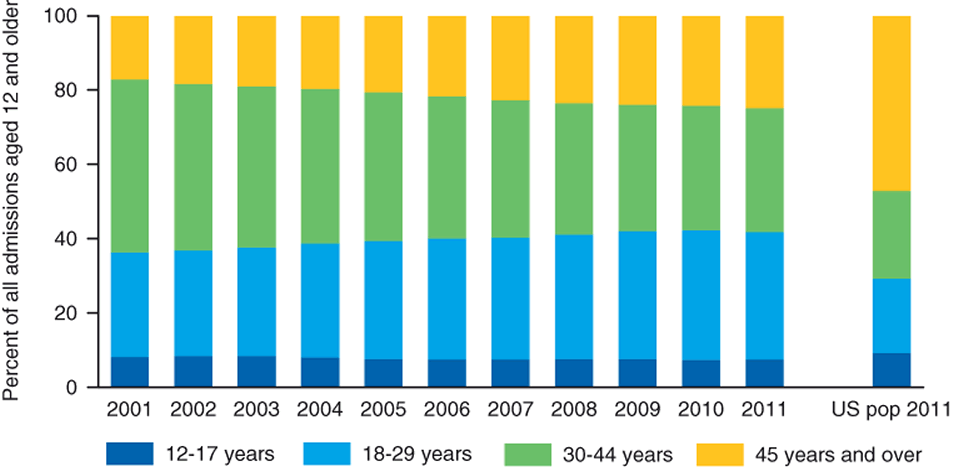
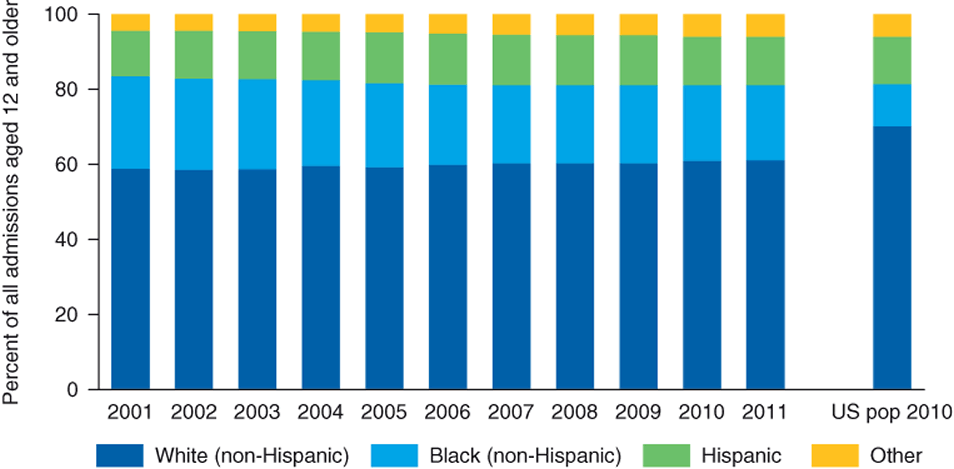
Table 1.4 and Figure 3. The racial/ethnic composition of TEDS admissions aged 12 and older changed very little between 2001 and 2011.
- Non-Hispanic Whites made up 58 to 61 percent of admissions throughout the time period.
- The proportion of nonHispanic Blacks declined, from 25 percent of admissions in 2001 to 20 percent in 2011.
- The decline in non-Hispanic Blacks was offset slightly by increases in the proportions of admissions of Hispanic origin (from 12 percent in 2001 to 13 percent in 2011) and for other racial/ethnic groups combined (from 4 percent in 2001 to 6 percent in 2011).
- The racial/ethnic composition of TEDS admissions differed from that of the U.S. population. Non-Hispanic Whites were the majority in both groups, but they represented 61 percent of TEDS admissions in 2011 compared to 70 percent of the U.S. population. Non-Hispanic Blacks represented 20 percent of TEDS admissions in 2011 and 11 percent of the U.S. population. However, the proportion of TEDS admissions of Hispanic origin (13 percent) was the same as the proportion of Hispanics in the U.S. population (13 percent). Other racial/ethnic groups made up 6 percent of TEDS admissions and 6 percent of the U.S. population.
Figure 3.
Race/ethnicity of admissions: TEDS 2001-2011 and U.S. population 2011
Trends in Employment Status
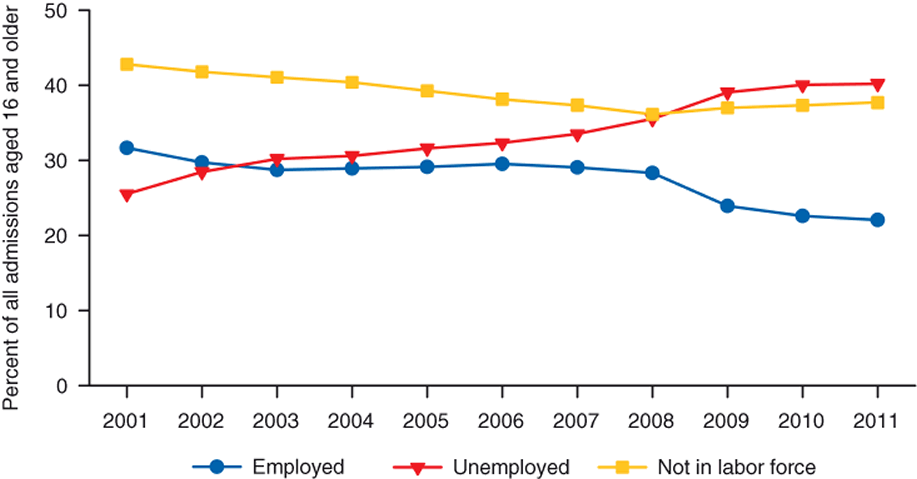
Table 1.5 and Figure 4. TEDS admissions aged 16 and older were less likely to be employed than the U.S. population aged 16 and older. This is evident in the unadjusted distributions of admissions by employment status (employed, unemployed, and not in labor force) shown in Table 1.5. Because TEDS admissions differ demographically from the U.S. population, Table 1.5 also shows distributions that have been statistically adjusted to provide a more valid comparison to the U.S. population.3 The adjusted distributions indicate an even greater disparity in socioeconomic status than do the unadjusted.
- Between 2001 and 2011, unemployment grew from the least common employment status reported (26 percent) by treatment admissions aged 16 and older to the most common treatment admission status (40 percent).
- The most common employment status reported by TEDS admissions aged 16 and older between 2001 and 2008 was “not in labor force.” However, this proportion declined from a peak of 43 percent in 2001 to 38 percent in 2011.
- Among the U.S. population aged 16 and older in 2011, 36 percent were not in the labor force.
Figure 4.
Employment status at admission, aged 16 and older: 2001-2011
3
TO TABLES
