 |
| August 7, 2014 |
Emergency Department Visits for Drug-Related Suicide Attempts among Middle-Aged Adults Aged 45 to 64
|
Suicide is a significant public health problem. Recently, suicide mortality became the leading cause of injury mortality in the United States, surpassing motor vehicle accidents, poisoning, falls, and homicide.1 In 2010, approximately 38,000 people died by suicide in the United States, and of these deaths, approximately 6,600 were attributable to poisoning.2 Poisoning is now the third most frequently used mechanism for suicide, behind firearms and suffocation/hanging.3,4
Current data indicate that a past suicide attempt is the strongest consistent predictor for both repeat suicide attempts and suicide death.5,6 In 2008 and 2009, an estimated 1 million adults reported attempting suicide in the past year.7 Historically, suicide prevention efforts primarily target teens, young adults, and the elderly, as these are the populations considered most at risk.3 However, suicide attempts (and the suicide death rate) among middle-aged adults has been increasing in recent years.3,7 The increasing trends of suicide attempts and suicide death among middle-aged adults highlights the importance of increasing awareness for suicide risk factors and improving potential suicide prevention strategies and interventions among this population.
The Drug Abuse Warning Network (DAWN) is a public health surveillance system, sponsored by the Substance Abuse and Mental Health Services Administration (SAMHSA), which monitors drug-related emergency department (ED) visits in the United States and can be used to examine ED visits for drug-related suicide attempts. To be a DAWN case, an ED visit must involve a drug, either as the direct cause of the visit or as a contributing factor. Although DAWN includes only suicide attempts that involve drugs, these attempts are not limited to drug overdoses. If there is drug involvement in a suicide attempt by other means (e.g., self-inflicted wounds while under the influence of marijuana), the case is included as drug-related. Excluded are suicide attempts with no drug involvement and suicide-related behaviors other than actual attempts (e.g., suicidal ideation or suicidal thoughts); also excluded are suicide attempts involving alcohol as the sole substance for patients aged 21 or older. This issue of The DAWN Report highlights the characteristics of drug-related ED visits involving suicide attempts in middle-aged adults aged 45 to 64 in 2011 as well as recent trends.
Overview
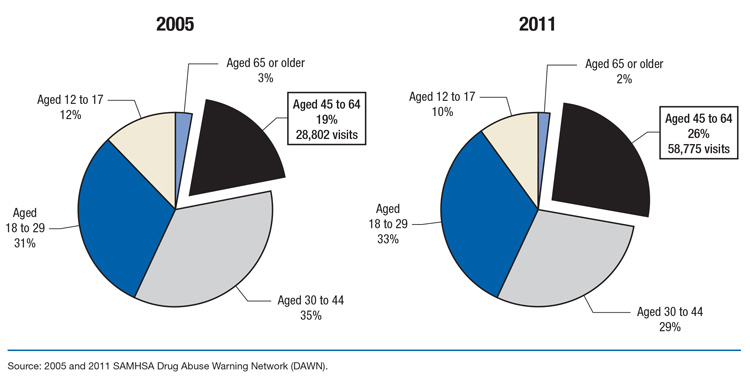
According to DAWN data, there was a 51 percent increase in drug-related ED visits involving suicide attempts among individuals aged 12 or older from 2005 to 2011 (from 151,477 to 228,277 visits). Although there was a statistically significant increase in drug-related ED visits involving suicide attempts among patients aged 18 to 29, which increased 58 percent from 2005 to 2011 (from 47,512 to 75,068 visits), ED visits for patients aged 45 to 64 doubled (increased 104 percent) from 28,802 visits in 2005 to 58,775 visits in 2011. Moreover, in 2011, patients aged 45 to 64 accounted for 26 percent of all drug-related ED visits involving suicide attempts—a significant increase from 19 percent in 2005 (Figure 1).
 |
| Age Group | 2005 | 2011 |
|---|---|---|
| Aged 65 or older | 3% | 2% |
| Aged 45 to 64 | 19% (28,802 visits) |
26% (58,775 visits) |
| Aged 30 to 44 | 35% | 29% |
| Aged 18 to 29 | 31% | 33% |
| Aged 12 to 17 | 12% | 10% |
| Source: 2005 and 2011 SAMHSA Drug Abuse Warning Network (DAWN). |
ED Visits, by Gender
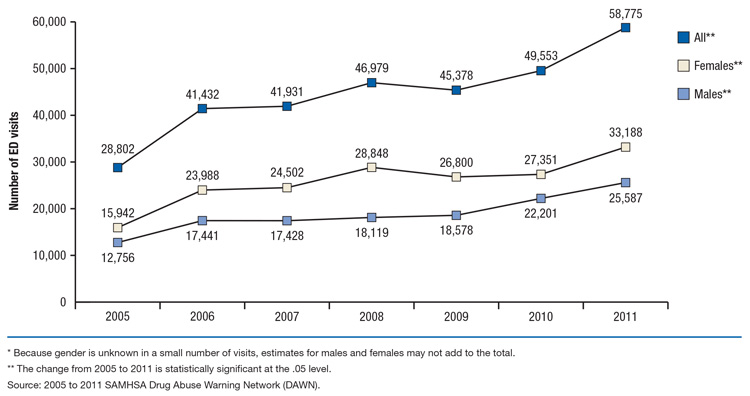
Among patients aged 45 to 64, both males and females had a statistically significant increase in drug-related ED visits involving suicide attempts. ED visits among males and females doubled (101 and 108 percent increases, respectively) from 2005 to 2011 (Figure 2). Visits by males increased from 12,756 visits in 2005 to 25,587 visits in 2011 and visits by females increased from 15,942 visits in 2005 to 33,188 visits in 2011. During this period, females comprised 58 percent of the visits, and males comprised 42 percent of the visits, on average; this proportion remained consistent.
 |
| Gender | 2005 | 2006 | 2007 | 2008 | 2009 | 2010 | 2011 |
|---|---|---|---|---|---|---|---|
| All** | 28,802 | 41,432 | 41,931 | 46,979 | 45,378 | 49,553 | 58,775 |
| Females** | 15,942 | 23,988 | 24,502 | 28,848 | 26,800 | 27,351 | 33,188 |
| Males** | 12,756 | 17,441 | 17,428 | 18,119 | 18,578 | 22,201 | 25,587 |
| * Because gender is unknown in a small number of visits, estimates for males and females may not add to the total. ** The change from 2005 to 2011 is statistically significant at the .05 level. Source: 2005 to 2011 SAMHSA Drug Abuse Warning Network (DAWN). |
Drugs Involved in ED Visits
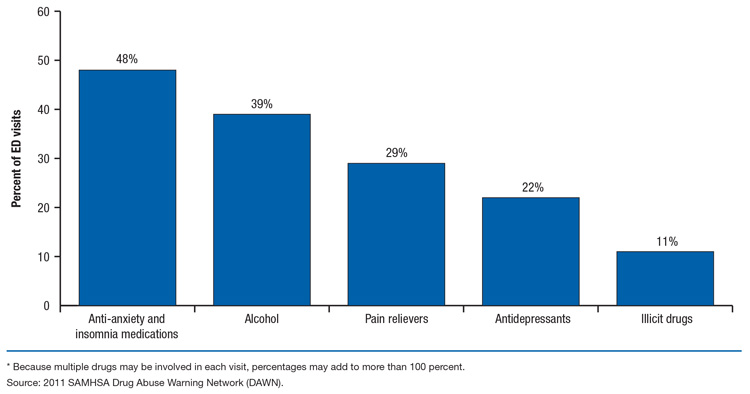
In 2011, the majority of all drug-related ED visits involving suicide attempts among patients aged 45 to 64 involved prescription drugs and over-the-counter (OTC) medications (96 percent). Specifically, 48 percent of visits involved anti-anxiety and insomnia medications, 29 percent involved pain relievers, and 22 percent involved antidepressants (Figure 3). Among this age group, about 39 percent of all drug-related ED visits involving a suicide attempt involved alcohol, and 11 percent involved illicit drugs.
 |
| Substance | Percent of ED Visits |
|---|---|
| Anti-anxiety and insomnia medications | 48% |
| Alcohol | 39% |
| Pain relievers | 29% |
| Antidepressants | 22% |
| Illicit drugs | 11% |
| * Because multiple drugs may be involved in each visit, percentages may add to more than 100 percent. Source: 2011 SAMHSA Drug Abuse Warning Network (DAWN). |
The number of ED visits for suicide attempts among patients aged 45 to 64 that involved prescription drugs and OTC medications doubled from 26,983 visits in 2005 to 56,172 visits in 2011 (Table 1). Narcotic pain relievers were involved in 3,603 visits in 2005, which increased 148 percent to 8,939 visits in 2011. Visits involving benzodiazepines—a class of drugs used to treat anxiety—increased 120 percent from 10,709 visits in 2005 to 23,588 visits in 2011. Additionally, visits involving alcohol doubled from 10,813 visits in 2005 to 22,763 visits in 2011. There were no significant increases for visits involving illicit drugs, including cocaine and marijuana, however.
| Drug category | Number of ED visits in 2005 |
Number of ED visits in 2011 |
Percent change, 2005 to 2011 |
|---|---|---|---|
| Total ED visits | 28,802 | 58,775 | 104%** |
| Prescription drugs and over-the-counter (OTC) medications | 26,983 | 56,172 | 108%** |
| Anti-anxiety and insomnia medications | 14,033 | 28,299 | 102%** |
| Benzodiazepines | 10,709 | 23,588 | 120%** |
| Pain relievers | 7,960 | 17,042 | 114%** |
| Narcotic pain relievers | 3,603 | 8,939 | 148%** |
| Antidepressants | 6,765 | 13,054 | NC |
| Alcohol | 10,813 | 22,763 | 111%** |
| Illicit drugs | 4,378 | 6,687 | NC |
| Cocaine | 2,402 | 3,309 | NC |
| Marijuana | 1,332 | 2,052 | NC |
| NC = no significant change. NOTE: Because the population of adults aged 45 to 64 has increased over time, an increase in the number of ED visits among this age group is expected to occur. However, when population growth is taken into account, the increase in ED visits cannot be attributed solely to an increase in the population size. That is, population rates confirm the increase for adults aged 45 to 64. Specifically, the rate increased for prescription drugs and OTC medications involvement overall and for narcotic pain reliever involvement in ED visits for suicide attempts among patients aged 45 to 64. However, the population rates did not vary significantly during this period for visits involving alcohol, anti-anxiety medications including benzodiazepines, and pain relievers overall. * Because multiple drugs may be involved in each visit, estimates of visits by drug may add to more than the total. ** The difference between 2005 and 2011 is statistically significant at the .05 level. Source: 2005 and 2011 SAMHSA Drug Abuse Warning Network (DAWN). |
Individual Drugs and Specific Drug Combinations
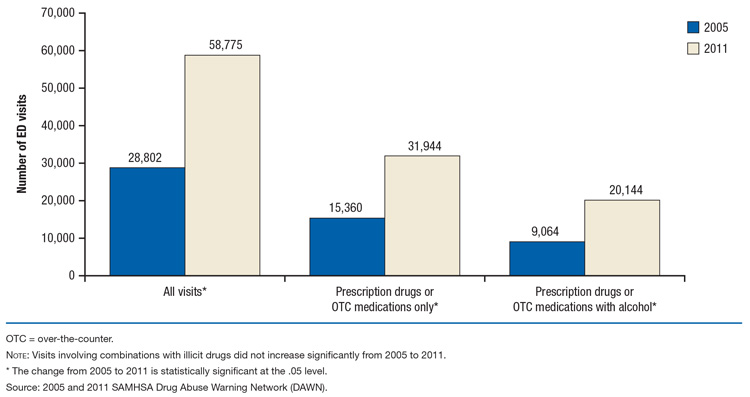
Among 45 to 64 year olds, ED visits more than doubled for suicide attempts where prescription drugs and OTC medications were the only drugs involved—from 15,360 visits in 2005 to 31,944 visits in 2011—a 108 percent increase (Figure 4). Visits involving alcohol combined with prescription drugs and OTC medications (with no illicit drug involvement) had a statistically significant increase of 122 percent from 9,064 visits in 2005 to 20,144 visits in 2011. Combinations with illicit drugs did not increase from 2005 to 2011, and illicit drugs were rarely reported as the sole type of drug during this period.
 |
| Selected substances | 2005 | 2011 |
|---|---|---|
| All visits* | 28,802 | 58,775 |
| Prescription drugs or OTC medications only* | 15,360 | 31,944 |
| Prescription drugs or OTC medications with alcohol* | 9,064 | 20,144 |
| OTC = over-the-counter. NOTE: Visits involving combinations with illicit drugs did not increase significantly from 2005 to 2011. * The change from 2005 to 2011 is statistically significant at the .05 level. Source: 2005 and 2011 SAMHSA Drug Abuse Warning Network (DAWN). |
Disposition
In this report, follow-up care is defined as admission to an inpatient unit in the hospital or transfer to another health care facility. Even though there was a statistically significant increase in the number of patients aged 45 to 64 who received follow-up care after a drug-related suicide attempt (from 24,719 visits in 2005 to 45,722 visits in 2011), the overall change in percentage receiving follow-up care (86 to 78 percent) was not significantly different (Figure 5). In 2011, 78 percent of the ED visits had evidence of follow-up care, which was not statistically different from the percentage in 2005. Similarly, the number of ED visits involving drug-related suicide attempts among patients aged 45 to 64 with no evidence of follow-up care also appeared to increase from 4,074 visits in 2005 to 12,887 visits in 2011; however, the change was not statistically significant. In 2011, 22 percent of visits had no evidence of follow-up care, which was not statistically different from 2005. Due to low estimates, the number of patients who died in the ED is not reported to protect patient confidentiality.
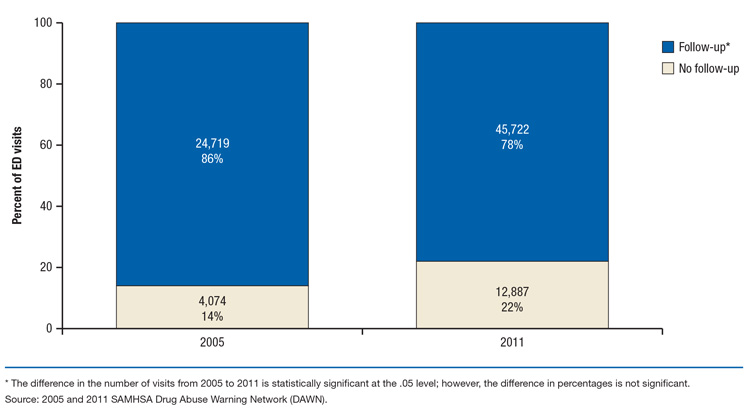 |
| Disposition | 2005: Number | 2005: Percent | 2011: Number | 2011: Percent |
|---|---|---|---|---|
| Follow-up* | 24,719 | 86% | 45,722 | 78% |
| No follow-up | 4,074 | 14% | 12,887 | 22% |
| * The difference in the number of visits from 2005 to 2011 is statistically significant at the .05 level; however, the difference in percentages is not significant. Source: 2005 and 2011 SAMHSA Drug Abuse Warning Network (DAWN). |
In 2011, follow-up care for visits involving drug-related suicide attempts by patients aged 45 to 64 included admissions to the intensive/critical care unit (23 percent), psychiatric unit (7 percent), or other inpatient units (28 percent) (Table 2). Additionally, 20 percent were transferred to another health care facility. For visits with no evidence of follow-up care, most patients were treated and discharged to their homes (12 percent).
| Drug category | Number of ED visits | Percent of ED visits |
|---|---|---|
| Total ED visits | 58,775 | 100% |
| No follow-up | 12,887 | 22% |
| Discharged home | 7,189 | 12% |
| Left against medical advice | * | * |
| Referred to detoxification program or substance use treatment facility | * | * |
| Died | * | * |
| Other | 860 | 1% |
| Follow-up | 45,722 | 78% |
| Admitted to intensive/critical care unit | 13,491 | 23% |
| Admitted to psychiatric unit | 4,332 | 7% |
| Admitted to chemical dependency/detoxification unit | * | * |
| Admitted to other inpatient unit | 16,164 | 28% |
| Transferred to another hospital or health care facility | 11,685 | 20% |
| * Low precision; no estimate reported. NOTE: To preserve patient confidentiality, those who died in the ED are grouped with the "No follow-up" category. However, the number is excluded from the total number of visits with no follow-up in this report. Source: 2011 SAMHSA Drug Abuse Warning Network (DAWN). |
Discussion
The suicide death rate has been steadily increasing in recent years.1 Poisoning (predominantly drug overdose) is the leading mechanism for suicide death among females aged 35 to 64 and the third leading mechanism for males in this age group.4 However, current suicide prevention strategies are primarily targeted towards teenagers, young adults, and the elderly.3 This report highlights the increasing trend in drug-related ED visits involving suicide attempts among adults aged 45 to 64 from 2005 to 2011. This increase in suicide attempts (and suicide death) among middle-aged adults underscores the importance of understanding risk factors for suicide in this age group to ensure that targeted preventive interventions are implemented.3,4,8
As indicated in this report, nearly all of the drug-related ED visits involving a suicide attempt among patients aged 45 to 64 involved prescription drugs or OTC medications, such as anti-anxiety and insomnia, pain, and depression medications. Routinely screening patients for depression and other affective disorders can be a method used by prescribing physicians to potentially assist with making informed decisions on the best course of treatment for common symptoms such as pain and insomnia.
Furthermore, data suggest that when a person attempts suicide, he or she is at a higher risk for repeating an attempt and dying by suicide.5,6 Moreover, the therapy and potential medication a patient receives in follow-up care after a suicide attempt are protective factors in preventing repeat suicide attempts and suicide death.5 Despite the reported increase in drug-related suicide attempts among patients aged 45 to 64, not every patient received follow-up care after their ED visit (approximately 22 percent did not in 2011). In the ED, a multidimensional assessment incorporating both risk and protective factors can assist with appropriate discharge planning (i.e., follow-up care) and can help patients who have attempted suicide and their families develop a safety plan (i.e., coping strategies and sources of support).5,9
Additionally, careful patient-specific suicide prevention interventions should continue even after discharge from follow-up care. A recent study indicated that the first 30 days after discharge from follow-up care (i.e., psychiatric in-patient treatment) resulting from a suicide attempt posed the highest risk for suicide death.10 Therefore, careful monitoring of patients who have been recently discharged from follow-up care settings, especially during the first month of discharge, can help reduce the risk of a repeat suicide attempt and potential suicide death.
Resources to guide ED staff are available from SAMHSA's Suicide Prevention Resource Center at http://www.sprc.org, and crisis counseling is always available through the Suicide Prevention Lifeline at http://www.suicidepreventionlifeline.org/ or 1-800-273-TALK(8255). To learn more about suicide and suicide prevention, visit the Centers for Disease Control and Prevention's National Center for Injury Prevention and Control at http://www.cdc.gov/violenceprevention/suicide/index.html.
End Notes
1 Rockett, I. R., Regier, M. D., Kapusta, N. D., Coben, J. H., Miller, T. R., Hanzlick, R. L., Todd, K. H., Sattin, R. W., Kennedy, L. W., Kleinig, J., & Smith, G. S. (2012). Leading causes of unintentional and intentional injury mortality: United States, 2000–2009. American Journal of Public Health, 102(11), e84–92.
2 Murphy, S. L., Xu, J. Q., & Kochanek, K. D. (2013). Deaths: Final data for 2010. National Vital Statistics Reports, 61(4). Retrieved from http://www.cdc.gov/nchs/data/nvsr/nvsr61/nvsr61_04.pdf
3 Hu, G., Wilcox, H. C., Wissow, L., & Baker, S. P. (2008). Mid-life suicide: An increasing problem in U.S. whites, 1999–2005. American Journal of Preventive Medicine, 35(6), 589–593.
4 Sullivan, E. M., Annest, J. L., Luo, F., Simon, T. R., & Dahlberg, L. L. (2013). Suicide among adults aged 35–64 years—United States, 1999–2010. Morbidity and Mortality Weekly Report, 62(17), 321–325. Retrieved from http://www.cdc.gov/mmwr/preview/mmwrhtml/mm6217a1.htm
5 Fowler, J. C. (2012). Suicide risk assessment in clinical practice: Pragmatic guidelines for imperfect assessments. Psychotherapy, 49(1), 81–90.
6 Centers for Disease Control and Prevention. (2012). Understanding suicide: Fact sheet. Retrieved from http://www.cdc.gov/violenceprevention/pdf/suicide_factsheet_2012-a.pdf
7 Crosby, A. E., Han, B., Ortega, L. A. G., Parks, S. E., & Gfroerer, J. (2011). Suicidal thoughts and behaviors among adults aged ≥18 years-United States, 2008–2009. Morbidity and Mortality Weekly Report, 60(SS13), 1–22. Retrieved from http://www.cdc.gov/mmwr/preview/mmwrhtml/ss6013a1.htm?s_cid=ss6013a1_e
8 Phillips, J. A., Robin, A. V., Nugent, C. N., & Idler, E. L. (2010). Understanding recent changes in suicide rates among the middle-aged: Period or cohort effects? Public Health Reports, 125(5), 680–688. Retrieved from http://www.ncbi.nlm.nih.gov/pmc/articles/PMC2925004/pdf/phr125000680.pdf
9 National Suicide Prevention Lifeline. (n.d.). How can a safety plan help? Retrieved from http://www.suicidepreventionlifeline.org/learn/safety.aspx
10 Hunt, I. M., Kapur, N., Webb, R., Robinson, J., Burns, J., Shaw, J., & Appleby, L. (2009). Suicide in recently discharged psychiatric patients: A case-control study. Psychological Medicine, 39(3), 443–449.
Suggested Citation
Substance Abuse and Mental Health Services Administration, Center for Behavioral Health Statistics and Quality. (August 7, 2014). The DAWN Report: Emergency Department Visits for Drug-Related Suicide Attempts among Middle-Aged Adults Aged 45 to 64. Rockville, MD.
| The Substance Abuse and Mental Health Services Administration (SAMHSA) is the agency within the U.S. Department of Health and Human Services that leads public health efforts to advance the behavioral health of the nation. SAMHSA's mission is to reduce the impact of substance abuse and mental illness on America's communities. The Drug Abuse Warning Network (DAWN) is a public health surveillance system that monitors drug-related morbidity and mortality. DAWN uses a probability sample of hospitals to produce estimates of drug-related emergency department (ED) visits for the United States and selected metropolitan areas annually. DAWN also produces annual profiles of drug-related deaths reviewed by medical examiners or coroners in selected metropolitan areas and states. Any ED visit related to recent drug use is included in DAWN. All types of drugs—licit and illicit—are covered. Alcohol involvement is documented for patients of all ages if it occurs with another drug. Alcohol is considered an illicit drug for patients under age 21 and is documented even if no other drug is involved. The classification of drugs used in DAWN is derived from the Multum Lexicon, copyright 2012 Lexi-Comp, Inc., and/or Cerner Multum, Inc. The Multum Licensing Agreement governing use of the Lexicon can be found at https://www.samhsa.gov/data/data-we-collect/dawn-drug-abuse-warning-network. DAWN is one of three major surveys conducted by SAMHSA's Center for Behavioral Health Statistics and Quality (CBHSQ). For more information on other CBHSQ surveys, go to https://www.samhsa.gov/data/. SAMHSA has contracts with Westat (Rockville, MD) and RTI International (Research Triangle Park, NC) to operate the DAWN system and produce publications. For publications and additional information about DAWN, go to https://www.samhsa.gov/data/data-we-collect/dawn-drug-abuse-warning-network. |
DAWN_154